
- LIFESTYLE
- FASHION
- FOOD
- ENTERTAINMENT
- EVENTS
- CULTURE
- VIDEOS
- WEB STORIES
- GALLERIES
- GADGETS
- CAR & BIKE
- SOCIETY
- TRAVEL
- NORTH EAST
- INDULGE CONNECT

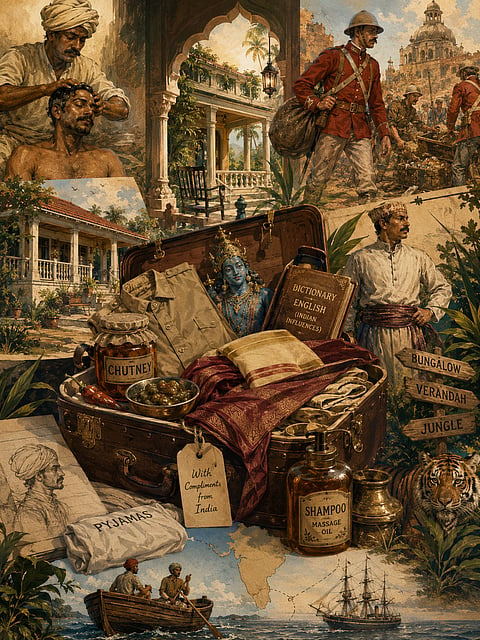
English is basically a linguistic potluck. It steals politely from Latin, aggressively from French, casually from Arabic, and then quietly walks away with entire suitcases from India. Many words Indians use daily feel completely ordinary now — office words, food words, clothing words, even architectural terms. Here are some everyday words with origins far stranger than most people realise.
The word shampoo comes from the Hindi-Urdu word champo, meaning to massage or knead. And here’s the plot twist: shampoo originally had nothing to do with hair-washing. When British colonials in India encountered traditional oil massages, they adopted both the practice and the word. In 18th-century English, ‘to shampoo’ meant getting a massage treatment.
The term verandah is derived from the Portuguese word varanda, which meaning balcony or railing. The Portuguese made extensive use of the word during their colonial control in India, which the British later adopted into English.
Loot comes directly from the Hindi word lut, meaning robbery or plunder. British soldiers and administrators stationed in India adopted the word during colonial campaigns in the 18th and 19th centuries.
The word comes from the Persian pae jama meaning leg garment which passed into Hindi-Urdu usage before entering English through British India. British colonials loved the loose, airy trousers so much they exported both the outfit and the word back to Europe.
The word bungalow comes from bangla, meaning ‘in the Bengali style’. Originally, these were low-rise homes designed for Bengal’s climate. British officials adapted the style across colonial India, and the term evolved into bungalow in English.
Ironically, jungle did not originally mean dense rainforest. The word comes from the Sanskrit jangala, which referred to rough, uncultivated, or even arid land. Through Hindi usage, the British adopted it as jungle, gradually associating it with tropical wilderness.
The word 'khaki' is derived from the Persian and Urdu word khak, which means dust. Because brilliant red military jackets were not the best for camouflage, men in the British Indian Army started wearing dust-coloured uniforms in the 19th century.
Cummerbund evolved from the Hindi-Urdu word kamarband — literally waist-band. British officers in colonial India adopted the sash-like accessory and Anglicised the pronunciation into cummerbund.
One of the rare Indian food words the English language adopted without fully destroying. Chutney comes from the Hindi word chatni, referring to freshly ground spicy condiments. The British exported heavily sweetened bottled versions abroad.
Guru can refer to a teacher, mentor, advisor, or spiritual authority in Sanskrit. Long before it was discovered by contemporary business culture, the phrase had profound philosophical and religious significance.
Long before gaming profiles and social media display pictures, avatar had spiritual roots. The word comes from the Sanskrit avatara, meaning descent or divine incarnation — particularly of a deity taking earthly form.