
- LIFESTYLE
- FASHION
- FOOD
- ENTERTAINMENT
- EVENTS
- CULTURE
- VIDEOS
- WEB STORIES
- SPORTS
- GADGETS
- CAR & BIKE
- TRAVEL
- SOCIETY
- GALLERIES
- NORTH EAST
- INDULGE CONNECT

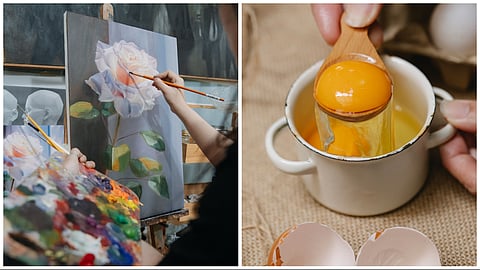
There might have been a very simple way for Leonardo da Vinci and other artists of the Renaissance era to solve the problems associated with oil paint: eggs. With egg-based tempera being substituted by oil paints in 15th-century Italy, Leonardo da Vinci and Sandro Botticelli, among other painters, tried out mixing the two. Modern science suggests that egg yolks in oil paintings would have improved texture and reduced yellowing.
Oil paintings became more flexible in comparison with tempera. The colours of oil painting appeared brighter, mixed more easily, and dried more slowly. The slow drying process allowed painters to work longer, but it also created difficulties, such as wrinkles that appeared in paintings during drying.
The egg yolk can thicken and stiffen the paint. This would mean that the artist had better control over the brush strokes, enabling them to create finer marks and even raised details in the painting. Egg yolk was also known to affect the drying process of the paint.
However, there was another advantage to using the material. The protein found in egg yolk would help to inhibit the absorption of moisture by the paint due to humid conditions during the drying process. Moreover, the egg yolk itself had properties of being an antioxidant. That's why the egg yolks in oil paintings slowed down the ageing of materials.
Leonardo Da Vinci might have known the advantages of using egg yolks in oil paintings. His painting Madonna of the Carnation (1478-1480) contains very unusual yet extensive wrinkles on the face of the Virgin, which can be seen as a problem of wrinkling faced by Leonardo Da Vinci while working on oil paintings in the beginning.
The two methods of incorporating egg yolks in oil paintings were examined: direct mixing of yolk in oil paint with a palette knife, which resulted in a stiff paint mixture. In the other, pigment was ground with diluted yolk and then mixed with oil. This method could be related to the technique used by Renaissance artists.
For more updates, join/follow our WhatsApp, Telegram and YouTube channels.