
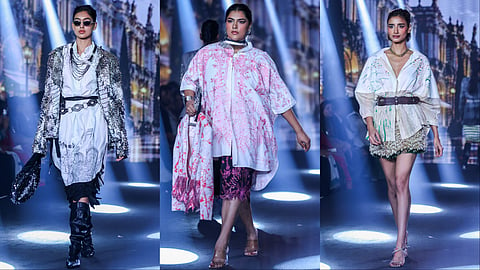
Designer Rahul Singh weaves the beauty of Indian heritage into Italian life in his new edit

Couturier Rahul Singh showcased his new collection Indi-Vita at Lakme Fashion Week x FDCI, which brings together Indian craftsmanship and Italian influences through a contemporary summer wardrobe. The range is inspired by Italian architecture and the Mediterranean way of life, incorporating traditional Indian techniques such as kantha embroidery and shibori dyeing on pure silks and breathable cottons. Relaxed silhouettes, lightweight fabrics and distinctive Indian craft details allow each piece to feel natural during the day, whether you’re exploring the Amalfi Coast or wandering through the streets of Tuscany. Rahul takes us through the easy-breezy, chic collection.
How did this cross-cultural inspiration spark?
We were drawn to the idea of dressing for a life lived beautifully, where fashion is as much about an experience as it is about an outfit. As Indian designers, we wanted to interpret this sensibility through our own cultural identity rather than simply recreate an Italian aesthetic.
Our indigenous crafts became the bridge between these two worlds. Through the intricate storytelling of kantha embroidery, the fluidity of shibori, and the richness of Indian textiles, we brought an Indian soul to the Italian-inspired narrative.
Kantha became a canvas for the landscapes and memories of Italy—its Tuscan vineyards, lemon groves, historic cities and coastlines—while shibori introduced an organic, almost painterly quality to the garments. We combined these craft traditions with contemporary silhouettes, relaxed holiday dressing and a touch of glamour.
What was the creative process behind balancing these heavy heritage textures with lighter fabrics like organic cottons, linens, and silk organzas?
The creative process began with the idea that heritage craftsmanship should feel effortless and contemporary, rather than ornamental or overwhelming. We wanted each technique to have its own identity, while coming together as part of a cohesive wardrobe. The balance came from being very conscious of the fabric, the placement of the craft and the silhouette. We used organic cottons and linens as a natural, breathable canvas for intricate embroidery. With silk organza, we explored transparency and fluidity, creating a sense of lightness around more elaborate details. Shibori introduced movement, colour and spontaneity. Instead of embellishing every surface, we allowed certain areas to remain untouched, giving the craftsmanship room to breathe. The interplay of texture and restraint became an important part of our design language.
How do you use cut-and-sew techniques to construct a modern silhouette without losing the garment’s fluid ease?
For us, cut-and-sew creates structure without compromising the garment’s natural movement. We understand how each fabric behaves and then develop the silhouette around its inherent qualities. With panelling and polka-stripe geometry, we use placement, proportion and directional cutting to create visual rhythm and contemporary architecture. The construction is deliberate, but the garment should never feel rigid. We pay particular attention to the balance between fitted and relaxed sections, allowing ease through the shoulders, body and sleeves. When pairing contrasting textures, such as a matka silk jacket with lighter, fluid elements or an organza overshirt, we consider how the fabrics interact in movement as much as how they look together.
What inspires you as a designer?
I find inspiration in the beauty of cultural diversity, human stories, and the richness of traditional Indian crafts. I am deeply drawn to preserving our heritage while giving it a contemporary, global expression. Nature, architecture, travel, and the experiences of different cultures constantly influence my creative journey. Ultimately, what inspires me most is fashion’s ability to tell a story, evoke an emotion, and give craftsmanship a new purpose.
What’s your fashion forecast for 2027?
I foresee a beautiful balance between relaxed, fluid silhouettes and more structured, statement-making pieces. Natural fabrics such as organic cotton, linen and handwoven silks will continue to gain relevance, while intricate embroidery, artisanal textures and innovative surface techniques will bring depth and character to contemporary wardrobes. I see colour becoming more expressive, with vibrant cobalt, sun-washed yellows, earthy neutrals and rich, unexpected combinations. The modern consumer will increasingly seek versatile garments that transition effortlessly from everyday life to travel and evening dressing. Ultimately, I believe the future of fashion lies in less disposable dressing, more meaningful design, and clothes that tell a story.