
- LIFESTYLE
- FASHION
- FOOD
- ENTERTAINMENT
- EVENTS
- CULTURE
- VIDEOS
- WEB STORIES
- SPORTS
- GADGETS
- CAR & BIKE
- TRAVEL
- SOCIETY
- GALLERIES
- NORTH EAST
- INDULGE CONNECT

When people are healthy, food becomes an enormous conversation. What should be ordered? How spicy? Fried or grilled? Dessert? Another drink? The possibilities can become ridiculous.
Then a fever arrives and suddenly all anyone wants is a bowl.
Something warm. Something soft. Something that does not require much chewing and certainly does not demand enthusiasm.
Across cultures, illness has produced its own small vocabulary of food.
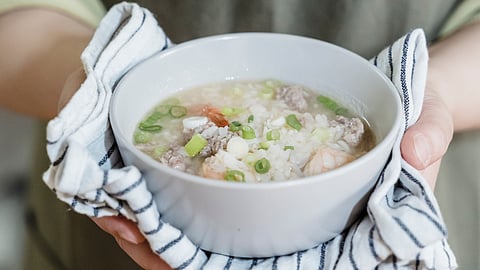
In Japan, there is okayu, a simple rice porridge made by cooking rice in plenty of water until it becomes soft and almost creamy. It is traditionally associated with recovery and is often kept deliberately mild. China has congee, which can be equally simple or dressed up with ginger, spring onions, chicken, pork or seafood depending on the region and the occasion.
The dishes are related, but their place in food culture is not identical. Congee has a much broader life in Chinese cuisine, while okayu is particularly associated with gentle eating and recovery in Japan.
India has no single sick food because India has never really had a single food culture.
There is kanji, rice cooked down with water, across parts of Kerala and elsewhere in the south. There is khichdi, whose soft combination of rice and lentils has made it a natural answer to days when the stomach is refusing to negotiate. And in Tamil homes there is rasam, particularly the peppery, garlicky varieties that arrive when someone has a cold that makes the entire house smells medicinal in the best possible way.
The interesting thing about rasam is that it is not really trying to be a soup in the Western sense. It belongs to a different culinary grammar. It is eaten with rice, sipped from a bowl, used to finish a meal or simply consumed because somebody has decided that you look terrible and need rasam.
Then there is chicken soup.
The idea that chicken soup belongs beside a sickbed is so deeply established in parts of Europe, North America and the Middle East that it can seem almost universal. It isn't. But variations of chicken broth and soup have appeared in food traditions across the world, often combining whatever meat, grain, herb or vegetable was locally available.
There is some science underneath the sentiment. A recent systematic review of soup and acute respiratory infections found preliminary evidence for modest improvements in symptoms and illness duration, although the researchers stressed that the evidence remains limited and better studies are needed. Warm liquids can also feel soothing and provide fluid and nourishment when appetite is poor.
In other parts of the world, the idea of sick food gets wonderfully specific. In the Philippines, arroz caldo, a ginger-scented rice porridge often made with chicken, is a familiar comfort when someone is under the weather. In Indonesia, bubur ayam does something similar, turning rice into a soft porridge topped with shredded chicken and condiments. In Korea, juk covers a whole family of rice porridges, including versions made with abalone, pumpkin or chicken. Across the Middle East, shorbat adas, a lentil soup seasoned with cumin and lemon, is another bowl that appears in many homes when appetite is low. The recipes differ wildly, but the logic is familiar: warm, soft, hydrating and easy to eat.
Some sick foods are far less obvious. In Mexico, caldo de pollo is a simple chicken broth with vegetables that often becomes the default answer to a cold or bad day. In Georgia, chikhirtma, a chicken soup thickened with egg and sharpened with vinegar or lemon, is traditionally associated with recuperation as well as celebration. In Iran, ash-e reshteh, a substantial soup of beans, herbs and noodles, is sometimes served when someone is ill, although it is hearty enough to be a meal in itself. In parts of West Africa, light porridges made from millet, sorghum or maize are common foods for children and adults when they are unwell. And in China, different regional versions of zhou, the broad family of rice and grain porridges, can range from almost entirely plain to flavoured with ginger, meat, fish or medicinal ingredients.
But the most important ingredient in sick food may be harder to measure.
Someone made it for you.
That is why sick food tends to be strangely specific. The congee somebody's mother made. The kanji served with a particular pickle. The rasam that only one person in the family knows how to make properly. The soup that appears without being requested.
For a brief while food becomes a way of saying you don't have to do anything right now.
When you are ill, the body does not want a culinary adventure. It wants familiarity. It wants something it already understands. Every culture, in its own way, seems to have figured this out. The ingredients change, but the message remains the same.
For more updates, join/follow our WhatsApp, Telegram and YouTube channels