
- LIFESTYLE
- FASHION
- FOOD
- ENTERTAINMENT
- EVENTS
- CULTURE
- VIDEOS
- WEB STORIES
- SPORTS
- GADGETS
- CAR & BIKE
- TRAVEL
- SOCIETY
- GALLERIES
- NORTH EAST
- INDULGE CONNECT

In the lofty villages of Ladakh, where the dry climate, harsh winds, winters and bright sun may cause problems for the skin, apricot oil has been traditionally utilised as part of a personal skincare routine. Derived from the innermost part of apricot pits, this precious yellow oil has always been appreciated by local people for its nourishing properties for the skin.
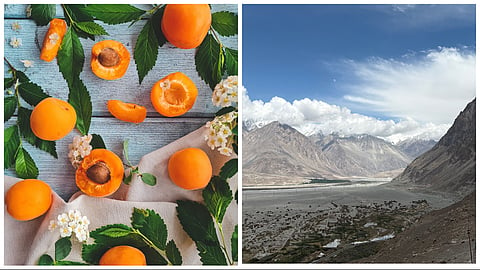
This process starts with the harvest of apricots. Called Chuli locally, these apricots have been cultivated in Ladakh for generations in Sham Valley, Nubra, Kargil, Dha-Hanu and even along the banks of the Indus River. These fruits are harvested by family members during the summer months, when there is a very short period for harvesting them.
But the stones serve another purpose too. Families break them to extract the kernels, and then press the kernels to make apricot oil. Family members used to process kernels in the off-season, sharing stories while passing on knowledge.
Its use in skincare is directly related to the harsh climate of Ladakh. Most homes use the apricot oil on their face, hands and body post-bath or before going to bed. Other uses include traditional massages. Since winters are harsh, the cold winds make the skin dry, and therefore the oil is used to retain moisture in the skin.
The oil naturally has oleic and linoleic fatty acids, as well as palmitic, palmitoleic, stearic and arachidic acids in smaller quantities. According to research studies of Ladakh apricot seeds, the highest amount of oil present is 54.24%. The Ladakh apricot seed also has 17.75- 22.56% protein. Vitamin A and E and essential fatty acids are known for their nutritional value and conditioning properties.