
- LIFESTYLE
- FASHION
- FOOD
- ENTERTAINMENT
- EVENTS
- CULTURE
- VIDEOS
- WEB STORIES
- SPORTS
- GADGETS
- CAR & BIKE
- TRAVEL
- SOCIETY
- GALLERIES
- NORTH EAST
- INDULGE CONNECT

Ritwick Ganguly while researching about the South Indian culture discovered how the same animals were appearing across artefacts from the region.That discovery became Living Canvas: Fauna, Folklore, and Faith in India, curated entirely from Dakshina-Chitra’s own collection.
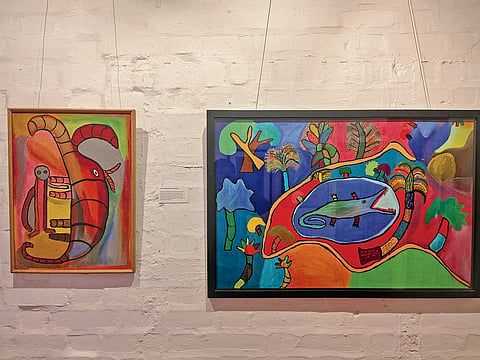
The show brings together about 20 works, across fabrics, paintings, and sculptures, arranged in four sections. Ritwick explains the premise of the show. “It’s about how humans have shared their life with the animals around them and how that has influenced their artwork and their culture.”
The first section looks at vahanas, the animals that accompany gods. Shiva has Nandi and Ganesha has Mushika, the rat. Ritwick reads the pairing as a lesson in self-control. “The rat is considered as human desires, which can lead a person in different directions. But then Ganesha, with his wisdom, channelises all those desires and guides the person towards prosperity and a better life.”
The second section turns to fabric. “In Kanjeevaram saris, we have seen peacocks, elephants etc in the lower part of the sari,” he says. Each comes with a note on what it signifies.
The third section is on tribal paintings. Madhubani, Naga, and Irula works round out the section. In the Naga pieces, the bison is a status symbol. In Irula paintings, scale carries the message. “The reptile sizes are much bigger than the human size, because they considered the reptiles and the snakes as much more important in their life.”
The final section is devoted to hybrid animals, such as the Yali, which is a combination of lion, elephant, and a snake predominantly. Annam (hamsa) and Kamadhenu appear too, Ritwick says. It was this section that surprised Ritwick most. “In Northern Indian culture, we have one or two, but in the South, there are many. Kamadhenu in the North is only a cow, whereas in the South it is a combination of two, three animals.”
On till November 16. 10 am to 6 pm. Closed on Tuesdays. At Kadambari Art Gallery, DakshinaChitra Heritage Museum, Muttukadu.
For more updates, join/follow our WhatsApp, Telegram and YouTube channels.