
- LIFESTYLE
- FASHION
- FOOD
- ENTERTAINMENT
- EVENTS
- CULTURE
- VIDEOS
- WEB STORIES
- SPORTS
- GADGETS
- CAR & BIKE
- TRAVEL
- SOCIETY
- GALLERIES
- NORTH EAST
- INDULGE CONNECT

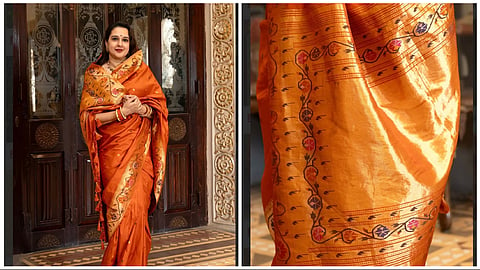
An attire woven with five-and-a-half months of dedication surely deserves more than just a passing glance. The Maharani of erstwhile princely state of Baroda, Radhikaraje Gaekwad, has decided to wear the kind of attire for Ganeshotsav. It is a handwoven silk paithani by label Arka, which combines natural dyeing, traditional motifs, and heritage of Maharashtra textiles.
The saree is crafted out of mulberry silk and is dyed with natural colours in rust orange. There are seven different colours on this saree, and it gives an additional level of beauty to the saree without compromising on its traditional aspect. Another additional feature in this saree is the tissue tawa pallu. This pallu has motifs of five-petal flowers as well as muniya birds in green with a little red on the beak.
The festive selection made by Radhikaraje Gaekwad also blends in well with a collection that is known for its rare and historical fabrics, since her collection contains fabrics dating back over a century. This fabric has been named after the old town of Paithan, located close to Aurangabad, where it originated in the royal courts. Its early productions consisted of silk from China mixed with zari made in the local area.
The saree worn by Radhikaraje Gaekwad also incorporates the imagery that has ensured the identification of Paithani through time. Peacock, parrot and lotus continue to figure prominently in their design vocabulary. Hans, Ashraffi, and Asawalli designs gained popularity during the Peshwa period. The pallu is traditionally linked with the muniya design, as well as Panja, ladder-like Barwa and Mor designs.