
- LIFESTYLE
- FASHION
- FOOD
- ENTERTAINMENT
- EVENTS
- CULTURE
- VIDEOS
- WEB STORIES
- SPORTS
- GADGETS
- CAR & BIKE
- TRAVEL
- SOCIETY
- GALLERIES
- NORTH EAST
- INDULGE CONNECT

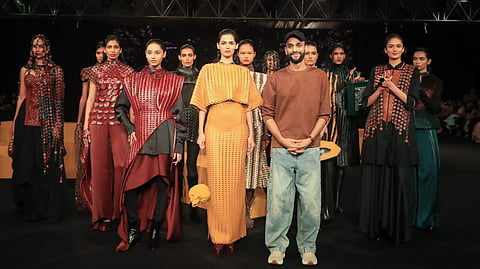
Alchemy traditionally implies turning base elements into something precious. But for designer Abhishek Chauhan, it means more than just that. And he has aptly replicated that in his eponymous showcase, which made him one of the NIF Global GenNext winners this season.
“For me, alchemy is about recognising a possibility in something and transforming it through imagination, experimentation and craftsmanship,” says Abhishek.
He showcased the well-imagined range at the recently concluded Lakme Fashion Week x FDCI and we were impressed by how he explored plant-based alternatives such as mango, cactus and tomato leather, fabrics made from orange fibres, and recycled polyester.
“Each material offered different possibilities in terms of texture, structure and surface. Rather than treating them merely as fabrics, I approached them as materials that could be manipulated, engineered and transformed into something beyond their conventional applications,” explains the Delhi-based designer.
The collection draws heavily from the visual language of oxidation, weathering and decay. The surfaces and silhouettes feel almost geological or organic, as though they evolved rather than being constructed.
Abhishek wants to create clothes that bolster confidence and self-awareness, allowing the wearer to occupy space in a more personal manner. The core inspiration for techniques came from studying decayed and corroded surfaces, the visual language of oxidation, and the intricate patterns that emerge when materials weather and change over time. “I was fascinated by how corrosion creates its own structures, textures and irregularities. I wanted to translate these observations into garment construction, not simply reproduce their appearance as a print,” explains Abhishek.
To that effect, he explored laser cutting and hand-interlocking techniques to develop individual components that could connect to form entirely new textile-like surfaces. Through inter-looping and interlocking, he brought together separate elements, creating a material with its own structure, texture and visual identity. He also worked with linked discs, eyelets and jump rings to create surfaces that combine structure with movement. Another important aspect was using offcuts generated during the laser-cutting process.
“Beyond the visual result, I wanted these techniques to offer a different perception of sustainable fashion, demonstrating that responsible material choices can lead to distinctive, experimental and sculptural design rather than requiring a compromise in creativity or aesthetic ambition,” he avers.
His long-term vision for Abhishek Chauhan Studio is to build a distinctive luxury label with a recognisable design language rooted in sculptural construction, material experimentation and conceptual storytelling. A significant part of Abhishek’s future direction is to contribute to a more sustainable future for fashion.
“I want to continue exploring alternative materials, making fuller use of resources and finding ways to minimise waste through thoughtful design and construction. I want to collaborate with craftspeople, material innovators and people whose skills or perspectives might not traditionally be included in the fashion-design process,” he tells us.
For more updates, join/follow our WhatsApp, Telegram and YouTube channels.