
- LIFESTYLE
- FASHION
- FOOD
- ENTERTAINMENT
- EVENTS
- CULTURE
- VIDEOS
- WEB STORIES
- SPORTS
- GADGETS
- CAR & BIKE
- TRAVEL
- SOCIETY
- GALLERIES
- NORTH EAST
- INDULGE CONNECT

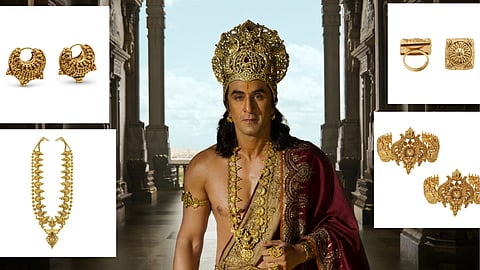
As the world witnesses the first glimpse of Ranbir Kapoor as Lord Ram in Ramayana, one of Indian cinema’s most ambitious mythological spectacles, an extraordinary story of craftsmanship unfolds behind the scenes. Tribe Amrapali, the official jewellery partner for the cinematic epic, has crafted the intricate jewellery that adorns the film’s characters.
For Tribe Amrapali, this collaboration extends far beyond jewellery design; it is a tribute to a timeless cultural legacy. Over a period of more than 18 months, the brand’s design team, under the creative leadership of Tarang Arora and in close collaboration with the film’s creative team, undertook extensive research into mythology, ancient Indian ornamentation, temple art, sculptures, and symbolic narratives to create a jewellery language that feels authentic to the world of Ramayana while meeting the scale and visual grandeur of modern cinema.
At the heart of Ram’s first look is a 335-gram statement necklace inspired by Kodanda, Lord Ram’s divine bow, symbolising strength, righteousness, and divine purpose. Crafted in silver and brass, the ornament serves as a visual expression of Ram’s noble character, his Suryavanshi lineage, and his embodiment of dharma.
The design incorporates a rich tapestry of symbolic motifs—circular medallions inspired by the Dharma Chakra, sun motifs representing the Solar Dynasty, lotus elements signifying purity and divinity, and intricate floral details drawn from the sacred gardens of Mithila and the Pushp Vatika, where Ram and Sita’s journey first intertwined.
Tarang tells us that the biggest creative challenge was letting go of the need to please every version of the epic that people carry in their heads. Second, the turnaround time. “Balancing that speed with the depth the subject deserved was probably the hardest part,” he says.
The team started with research into temple carvings, old texts, and regional styles from that period. “But cinema has its own language. A piece that looks right in a museum case doesn’t always hold up under studio lights or in a close-up. So it became a constant back and forth between what was historically sound and what actually worked on screen,” he shares.
They built full wardrobes for the main and secondary characters, as well as the background ensemble, rather than focusing only on standout pieces. “Jewellery in that era was part of daily life rather than occasional wear, so it needed to stay consistent from scene to scene, not just appear for the big moments,” says Tarang.
To ensure that the jewellery looked authentic on camera while also being practical for actors to wear during filming, they relied on lightweight construction techniques that preserved the intricate, layered look of traditional jewellery without the actual weight that comes with it.
For Tarang, this project changed the way he looked at Indian mythology and traditional jewellery. “It made me realise jewellery in our epics isn’t just decoration; it’s storytelling. What a character wears speaks to their journey, their status, even their state of mind. I don’t think I’ll look at traditional jewellery quite the same way again,” he signs off.
For more updates, join/follow our WhatsApp, Telegram and YouTube channels.