
- LIFESTYLE
- FASHION
- FOOD
- ENTERTAINMENT
- EVENTS
- CULTURE
- VIDEOS
- WEB STORIES
- SPORTS
- GADGETS
- CAR & BIKE
- TRAVEL
- SOCIETY
- GALLERIES
- NORTH EAST
- INDULGE CONNECT

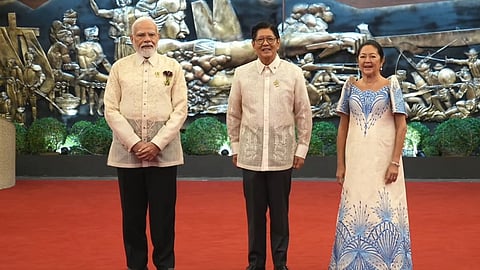
Prime Minister Narendra Modi swapped his familiar kurta for a barong tagalog on Monday night, and the Philippines' national formal shirt briefly became the most talked-about garment in Asia.
The occasion was the gala dinner hosted by Philippine President Ferdinand R. Marcos Jr. at the Philippine International Convention Centre in Manila, for leaders attending the 49th ASEAN Summit. PM Modi, in town for the 23rd ASEAN-India Summit and the 21st East Asia Summit, was photographed in a barong similar to the one worn by Marcos himself. Here is what the shirt is, where it comes from, and why a garment this simple carries so much meaning.
A barong tagalog is a lightweight, embroidered shirt worn untucked, and it is the Philippines' best-known formal menswear. The name comes from “baro”, the Tagalog word for dress or shirt, and roughly means "the dress of the Tagalog." It is the national dress and official formal menswear of the Philippines.
The classic version has a collar, long sleeves and a straight, boxy hem that sits over the hips. It is typically cut from a sheer or semi-sheer fabric, so the wearer's undershirt shows through. The finest versions are made from piña, a fibre taken from pineapple leaves, or from jusi, a silky cloth. The embroidery is the signature. Hand-stitched patterns run down the front panel and often around the collar and cuffs. The more intricate the work, the more prized the shirt.
The barong grew out of pre-colonial Filipino dress and took its modern shape under Spanish rule. A popular account holds that colonial authorities required native Filipinos to wear their shirts untucked and in sheer cloth, to mark them apart from Spaniards and make hidden weapons easy to spot. Historians debate how much of that story is documented, but it remains the best-known origin tale. The practical case is simpler: in a tropical climate, a thin untucked shirt keeps the wearer cool.
What began as everyday and class-marked clothing was later claimed as a national symbol. The barong is widely credited as having moved into politics in the 1950s, when Philippine presidents began wearing it at inaugurations and state occasions. Today it is standard at weddings, graduations, official functions and diplomatic dinners.
The rules are few on how to wear one, and they are what make the shirt look right. Leave it untucked, wear an undershirt and pair it with dark trousers. Formal shoes complete the outfit. Cream, ivory and white are the classic colours.
For more updates, join/follow our WhatsApp, Telegram and YouTube channels.