
- LIFESTYLE
- FASHION
- FOOD
- ENTERTAINMENT
- EVENTS
- CULTURE
- VIDEOS
- WEB STORIES
- SPORTS
- GADGETS
- CAR & BIKE
- TRAVEL
- SOCIETY
- GALLERIES
- NORTH EAST
- INDULGE CONNECT

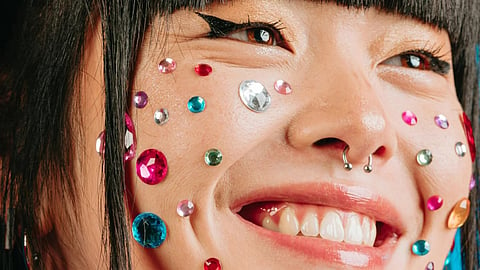
“Like the flowers which are planted in too rich a soil, strength and usefulness are sacrificed to beauty; and the flaunting leaves, after having pleased a fastidious eye, fade, disregarded on the stalk, long before the season when they ought to have arrived at maturity,” wrote Mary Wollstonecraft in A Vindication of the Rights of Woman, arguing against a culture that prized women's delicacy and ornamental qualities. Two centuries later, we find ourselves recalling that image amid the rise of plastic faux gemstones on our Instagram feeds.
Last month, for Kylie Jenner's 29th birthday, the model posted photographs from her birthday celebration in which she had decorated plastic cups and one of her cakes with colourful, gemstone-like stickers. Fortune Magazine reported on the rapid spread of the trend, which has been linked to the broader “whimsymaxxing” aesthetic.
Rhinestones and craft gems are commonly made from plastic and once detached from the items they were stuck onto, the individual pieces are difficult to recover and recycle. Unlike a flat sticker, these raised 3D stickers can loosen and detach through handling, friction, movement or washing, depending on the adhesive, surface and conditions of use. Anyone who has worn a bedazzled garment or handled a rhinestone-covered accessory knows that gems can disappear without anyone noticing — and once those pieces slip down a drain or into the trash, they can pose a real risk. The American National Oceanic and Atmospheric Administration says more than 700 species have been documented ingesting plastic, with ingestion capable of causing physical harm, including blockages and internal injuries.
ASINSIGHT, which tracks Amazon US sales, estimates that the top 50 listings associated with “rhinestones” sold 296,300 units in July 2026, compared with 87,500 in August 2025. A separate “bedazzling” category recorded 294,300 units in July 2026, compared with 64,400 in August 2025.
While the numbers indicate an alarming demand for these faux gemstones, one must look closely at what a month of "whimsymaxxing" actually requires. To keep the aesthetic going means to continuously buy, stick, and discard — new gems for a new cup, a new face mask, a new lip balm, etc. And if you're not doing that — if the coffee cup only gets its gems for one photograph — then the question is what the whimsy was actually for.
Perhaps that's the cost hiding beneath the sparkle — a generation reaching for faux gemstones as a stand-in for personality, mistaking a viral trend for a genuine sense of wonder, and calling it whimsy even as the glue gives out and the gems slide into the bin and then into a landfill. Maybe genuine whimsy should leave something behind beyond a good photograph. If the only lasting trace is a pile of plastic headed for the landfill, perhaps we should ask whether the trend was ever really about “whimsy” at all.
For more updates, join/follow our WhatsApp, Telegram and YouTube channels.