
- LIFESTYLE
- FASHION
- FOOD
- ENTERTAINMENT
- EVENTS
- CULTURE
- VIDEOS
- WEB STORIES
- SPORTS
- GADGETS
- CAR & BIKE
- TRAVEL
- SOCIETY
- GALLERIES
- NORTH EAST
- INDULGE CONNECT

When the mercury drops, gajar ka halwa tends to hog the winter spotlight. But India's winter dessert traditions extend far beyond this familiar favourite.From Bengal's date palm jaggery delicacies to Punjab's ghee-laden pinnis, here are six regional winter desserts worth discovering.
Winter in Bengal is synonymous with nolen gur, or fresh date palm jaggery. Harvested during the colder months, this fragrant jaggery lends its distinctive caramel-like sweetness to several Bengali delicacies. Among them is nolen gurer sandesh, a seasonal variation of the traditional sandesh made with fresh chhena (cottage cheese) and date palm jaggery. Soft, delicately sweet and rich in flavour, the sweet is often moulded into intricate shapes. Its limited seasonal availability makes it one of Bengal's most anticipated winter treats.
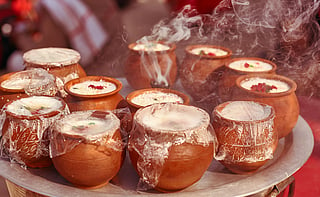
A winter speciality of Varanasi, malaiyo is a delicate, cloud-like dessert made by frothing milk and allowing it to set overnight in the cold morning air. The resulting airy foam is gently flavoured with saffron, cardamom and sugar, then garnished with chopped nuts. Traditionally served in small earthen cups, malaiyo is so light that it almost dissolves on the tongue.
This dense, fudge-like sweet is made from urad dal flour roasted in generous ghee, bound with jaggery or sugar, and loaded with nuts, edible gum, and warming spices such as dry ginger. Its aroma of toasted flour and spice fills the kitchen. Gujarati households have long prepared it for the cold months, believing it builds strength and keeps the chill at bay. One small square is more than enough.
A winter delicacy closely associated with Gaya in Bihar, tilkut is made by pounding roasted sesame seeds with jaggery or sugar until the mixture comes together into firm, round discs. Available in different varieties, including those made with jaggery, white sugar and khoya, the sweet is particularly popular during Makar Sankranti. Sesame seeds are traditionally valued for their warming properties, making tilkut a seasonal favourite. Its nutty flavour and satisfying crunch have made it an enduring part of Bihar's winter food culture.
Despite its name, Daulat ki chaat is a sweet rather than a savoury snack. A winter speciality found in the narrow lanes of Old Delhi, this delicate dessert is made by slowly whisking milk and cream until they form a light, frothy texture. Traditionally prepared overnight in the cold, it is collected in the early morning and served with a dusting of powdered sugar, khoya and nuts. Often finished with silver leaf, the dessert is prized for its airy consistency and fleeting availability, as warmer temperatures make its preparation difficult.
A staple in Punjabi households during winter, pinni is a rich, energy-dense sweet made with whole wheat flour, generous amounts of ghee, jaggery or sugar, nuts and edible gum. Some variations also include besan, dried dates and warming spices. The ingredients are slow-roasted before being shaped into round balls, resulting in a dense, crumbly treat with a deep, nutty flavour. Traditionally prepared in batches and stored for weeks, pinnis are often enjoyed with a glass of warm milk, making them a comforting winter indulgence.
For more updates, join/follow our WhatsApp, Telegram and YouTube channels.