
- LIFESTYLE
- FASHION
- FOOD
- ENTERTAINMENT
- EVENTS
- CULTURE
- VIDEOS
- WEB STORIES
- SPORTS
- GADGETS
- CAR & BIKE
- TRAVEL
- SOCIETY
- GALLERIES
- NORTH EAST
- INDULGE CONNECT

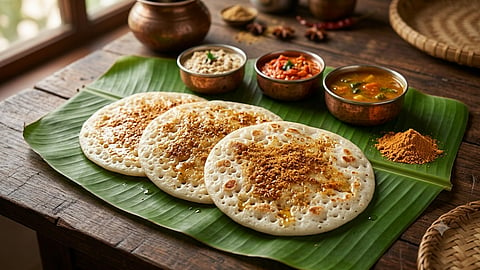
Idli comes in various varieties such as Kanchipuram idli and thatte idli. What makes Ramassery idli unique is its flat appearance like that of a dosa, a different way of preparation, and the softness of its texture. This variety of idli can be found in the village of Ramassery, located in Palakkad.
The history of Ramassery idli is intertwined with the Mudaliar community. It was comprised of weavers who migrated from cities like Kanchipuram, Tirupur and Thanjavur in Tamil Nadu to settle in Ramassery and bring along with them the recipe for their idlis. After falling out of favour due to dwindling demand for their wares, they started selling the idlis to labourers and farmers as well as for weddings and other functions. It was claimed that an individual called Chitori Ammal made the first one.
It is claimed that only four families in the village have been able to maintain the recipe in its original form. The Mudaliar families belong to the same family and have embraced Malayali traditions through time. They communicate in Malayalam with a touch of Tamil.
The rice used in Ramassery idli comes from Palakkad. The batter comprises local rice, black gram, fenugreek, and sea salt. Traditionally, the batter is poured into a wet muslin cloth that lies above an earthen pot. Another pot is then kept on top to allow steam to form inside and cook the idlis. This helps develop the meshed design on the bottom. Earthen pots have mostly been substituted with aluminium ones. It is also believed that flavour changes without wood fire.
After being cooked, the idli is placed on a plachi leaf, which makes it smell nice. The Ramassery idli is very soft and practically melts when eaten. Podi or smooth curries are served along with the idlis. These idlis can be preserved for about three days.
For more updates, join/follow our WhatsApp, Telegram and YouTube channels.