
- LIFESTYLE
- FASHION
- FOOD
- ENTERTAINMENT
- EVENTS
- CULTURE
- VIDEOS
- WEB STORIES
- SPORTS
- GADGETS
- CAR & BIKE
- TRAVEL
- SOCIETY
- GALLERIES
- NORTH EAST
- INDULGE CONNECT

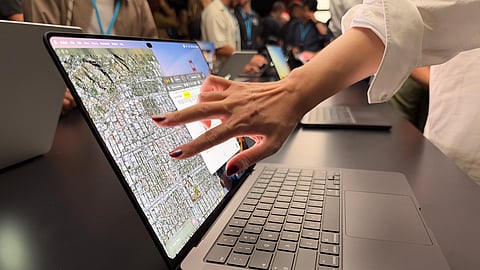
Apple’s “Pro and Tell” event in Los Angeles had a fairly obvious star attraction, and it wasn’t yet another chip upgrade. After years of resisting the idea of a touchscreen Mac, Apple has finally taken the plunge, unveiling a redesigned MacBook Pro with a touch-enabled OLED display. It’s the sort of move that makes you sit up and take notice, not least because it signals a significant shift in how Apple sees the future of the Mac. At the event, Apple also showcased much-needed overhaul of the iPad mini, new M6-powered Macs, and a broader push to weave AI into the company’s software and creative tools. Indulge was at LA for the event, and here are the big highlights.
The headline act is the new MacBook Pro with what Apple calls its PROLED XDR display, a tandem OLED panel that brings touchscreen functionality to the Mac for the first time (₹3,49,900 onwards). Available in 14- and 16-inch sizes, the display promises a 120Hz refresh rate, up to 2,000 nits of brightness and a remarkable 10,000,000:1 contrast ratio, and support for both P3 and Adobe RGB color spaces should also appeal to photographers, filmmakers and designers.
Touch isn’t just an extra way to poke at the screen. Apple has adapted macOS to make gestures such as swiping, pinching to zoom and dragging content feel more natural, while creative apps get more interesting possibilities. In Pixelmator Pro, you can work directly on the canvas; in Logic Pro, the display becomes a playable instrument; and Final Cut Pro gets touch-based editing controls.
There’s a new Dynamic Island, too, bringing Spotlight search, Live Activities and Siri AI within easy reach. And despite the hardware overhaul, Apple says the redesigned machines are thinner and lighter, with the 14-inch model weighing just 3 pounds and the 16-inch version around 4 pounds. And in a development no one anticipated, the glowing Apple logo on the lid makes a long-awaited comeback.
Under the hood, though, these premium machines use the M5 Pro and M5 Max chips, rather than the new M6. Apple claims up to 24 hours of battery life, with configurations offering up to 128GB of unified memory and 16TB of storage. It’s a substantial rethink of the MacBook Pro, and potentially a more consequential one than a routine performance bump. The bigger question is whether touchscreen convenience translates into a genuinely better laptop experience, which we’ll delve into in our full reviews.
M6 arrives on the MacBook Pro and iMac
Apple also refreshed its 14-inch entry-level MacBook Pro (₹2,39,900 onwards) with the M6 chip, arguably a more conventional upgrade, yet one with some serious performance claims. You get a 12-core CPU, a 12-core GPU, improved on-device AI capabilities and up to 24 hours of battery life, with Wi-Fi 7 and Bluetooth 6 rounding out the connectivity improvements.
The familiar Liquid Retina XDR display remains, so this model doesn’t get the OLED touchscreen treatment. That distinction matters: buyers now have two rather different 14-inch MacBook Pro propositions to consider, one prioritizing the new display and touch experience, the other offering the latest M-series silicon in a more familiar package. Rounding out the upgrades - the iMac also gets the M6 treatment, along with Apple’s N1 wireless chip and a choice of seven colors. It’s a relatively modest refresh, but the all-in-one remains a tidy option for anyone who wants a capable desktop without the clutter of a separate tower and monitor.
The iPad mini finally gets OLED
The iPad mini has arguably waited long enough for a proper display upgrade. Its latest iteration (₹82,900 onwards) gets an 8.5-inch OLED panel, up from 8.3 inches, without a corresponding increase in the overall footprint. Peak brightness rises to 1,200 nits, while the A20 Pro chip promises a substantial leap in graphics and AI performance.
There are other useful changes, too: IP67 dust and water resistance, a landscape-positioned 12MP Center Stage front camera, and a new Acoustic Display system designed to deliver fuller sound without the need for an IP-rating-compromising speaker grille. Cellular versions get Apple’s C2 modem, while the N1 chip adds Wi-Fi 7 and Bluetooth 6. It’s a more compelling little tablet on paper, particularly for people who value portability over screen size. The catch is the price: the OLED upgrade comes at a premium, and the display still runs at 60Hz.
The takeaway: this was a bigger week for the Mac than the product refreshes might initially suggest. M6 brings the expected performance gains, but the touchscreen MacBook Pro is the real statement of intent. Apple has spent years insisting the Mac and iPad serve different purposes. Now it’s beginning to blur that line, and it will be fascinating to see where it leads.
For more updates, join/follow our WhatsApp, Telegram and YouTube channels.