
- LIFESTYLE
- FASHION
- FOOD
- ENTERTAINMENT
- EVENTS
- CULTURE
- VIDEOS
- WEB STORIES
- SPORTS
- GADGETS
- CAR & BIKE
- TRAVEL
- SOCIETY
- GALLERIES
- NORTH EAST
- INDULGE CONNECT

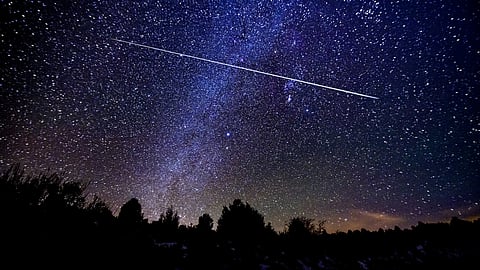
The next major meteor shower following the August Perseids is the Draconids, peaking on October 8–9. The Draconids (also known as the Giacobinids) are an annual meteor shower that occurs every October when Earth passes through the debris trail left behind by the comet 21P/Giacobini-Zinner.
However, because the Draconids produce a smaller burst (around 6 meteors per hour), autumn and winter bring several larger, more active meteor showers. Unlike most meteor showers — which peak between midnight and pre-dawn — the Draconids are best viewed in the early evening right after nightfall. This is because their radiant point sits highest in the sky at dusk.
The meteors appear to radiate from the northern constellation Draco the Dragon (near the head of the constellation). In a typical year, it is a modest shower yielding 5 to 10 meteors per hour. However, when the parent comet reaches its closest approach to the Sun, the Draconids can occasionally produce rare meteor storms featuring thousands of meteors per hour (historically recorded in 1933, 1946 and 2011).
The best part is that the Draconids are visible from anywhere in India, provided you have a clear, dark sky facing North/North-West (where the constellation Draco sits). This includes estate stays or astronomy camps around Coorg (Karnataka) or Idukki (Kerala) which offer dark Bortle Class 2–3 skies.
Draconid meteors enter Earth's atmosphere at a relatively slow velocity (~20 km/s or 45,000 mph), making them appear as gradual, lingering trails rather than fast-flashing streaks, blink-and-you-miss-it flashes. Travel 50–80 km outside major metropolitan areas (e.g., out toward Denkanikottai near Bengaluru or past the NCR belt near Delhi). Right after dusk, look up towards the northern sky between the Big Dipper and Polaris (the North Star), where the constellation Draco lies.