
- LIFESTYLE
- FASHION
- FOOD
- ENTERTAINMENT
- EVENTS
- CULTURE
- VIDEOS
- WEB STORIES
- SPORTS
- GADGETS
- CAR & BIKE
- TRAVEL
- SOCIETY
- GALLERIES
- NORTH EAST
- INDULGE CONNECT

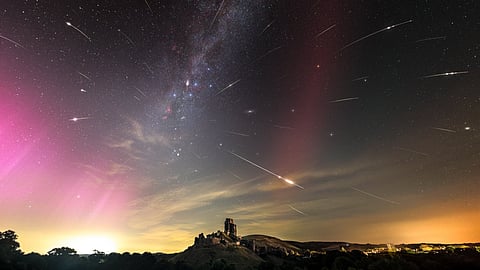
The annual Perseid meteor shower is set to light up the night sky once again this August, and 2026 promises one of the best displays in years. The shower reaches its peak on the night of August 12 and continues into the early hours of August 13, coinciding with a New Moon. With virtually no moonlight to brighten the sky, observers under dark conditions could witness up to 100 meteors an hour, including the Perseids' signature bright fireballs.
The biggest challenge for skywatchers in India is not the timing but the weather. August falls during the peak of the southwest monsoon, meaning cloud cover is likely to obscure the spectacle across much of the country, particularly in cities such as Mumbai, Delhi and Bengaluru. Instead, travellers should head to regions that remain relatively dry during this period.
Ladakh is among the best places to experience the shower. Destinations such as Hanle, known for the Indian Astronomical Observatory, and Nubra Valley offer exceptionally dark skies, high-altitude conditions and minimal light pollution. Spiti Valley in Himachal Pradesh is another excellent choice. Its cold desert landscape, sparse population and generally clearer skies during the monsoon make it well suited for stargazing. Further west, the deserts of Jaisalmer in Rajasthan and the vast white expanse of the Rann of Kutch in Gujarat provide wide, unobstructed horizons that enhance the viewing experience when skies remain clear.
One of the best aspects of the Perseids is that no specialised equipment is required. In fact, telescopes and binoculars can reduce your field of vision, making it harder to spot meteors streaking across the sky. The naked eye remains the best way to experience the shower.
Plan to arrive at your viewing location before midnight and stay until around 5 am, when meteor activity is expected to be at its highest. Find a dark spot away from streetlights and vehicle headlights, then allow your eyes at least 20 to 30 minutes to adjust to the darkness. Instead of focusing on a single point, lie back and scan the entire sky. Although the meteors appear to radiate from the constellation Perseus in the east-northeast, they can streak across any part of the sky. Patience is equally important, as periods of intense activity are often followed by quieter intervals.
For more updates, join/follow our WhatsApp, Telegram and YouTube channels.