
- LIFESTYLE
- FASHION
- FOOD
- ENTERTAINMENT
- EVENTS
- CULTURE
- VIDEOS
- WEB STORIES
- SPORTS
- GADGETS
- CAR & BIKE
- TRAVEL
- SOCIETY
- GALLERIES
- NORTH EAST
- INDULGE CONNECT

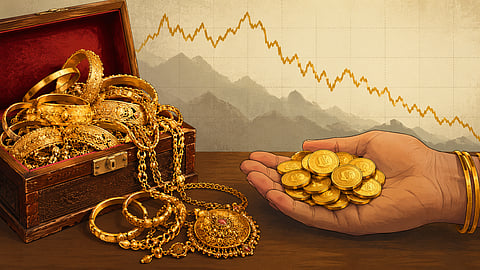
India has long been a nation of gold hoarders. But something unusual is happening: households are selling.
Data from the India Bullion & Jewellers Association (IBJA) shows that nearly 50 tonnes of old gold were sold back into the market during the April–June quarter of 2026 — a 43% jump from the same period last year, and one of the sharpest spikes in household gold recycling in recent memory. The timing is not accidental.
Gold in India hit a historic high of around INR 1.8 lakh per 10 grams earlier this year, then slid to roughly INR 1.4 lakh. The fear that prices could fall further to INR 1.2 lakh, by some estimates appears to have pushed many families toward the exit.
Rather than swapping old jewellery for new pieces, as is traditional, households are increasingly choosing a cleaner option: cash.
Industry voices frame this as rational behaviour. Families that bought gold years ago at a fraction of today's prices are locking in windfalls. But a parallel surge in gold-backed lending — households pledging jewellery as loan collateral — suggests that for some, the motivation is less opportunism and more a need for liquidity.
The sell-off is fuelling a recycling boom, benefiting organised players like Muthoot Exim and Augmont. Recycled gold is projected to contribute 200–250 tonnes to India's supply in 2026, up from 125–150 tonnes in 2025, a trend that could modestly reduce the country's heavy reliance on gold imports.
Even so, perspective matters. Indian households collectively hold an estimated 30,000 tonnes. What's entering the market is, in the grand scheme, a rounding error.
The lockers are opening. Whether they stay open is another matter.
For more updates, join/follow our WhatsApp, Telegram and YouTube channels.