
- LIFESTYLE
- FASHION
- FOOD
- ENTERTAINMENT
- EVENTS
- CULTURE
- VIDEOS
- WEB STORIES
- SPORTS
- GADGETS
- CAR & BIKE
- TRAVEL
- SOCIETY
- GALLERIES
- NORTH EAST
- INDULGE CONNECT

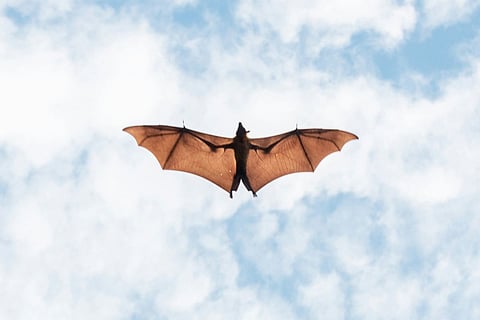
If you thought mammals couldn't fly, here's an interesting nugget of trivia for you. There is one mammal that can soar through the night sky, navigate in complete darkness and even hang upside down while catching some sleep. Yes, you guessed it right – it's the bat! Bats are the only mammals capable of true, sustained flight. They use their flying skills to catch prey, find mates, escape predators and migrate over long distances.
Bats are winged mammals and, surprisingly, are more agile in flight than most birds. They belong to the second-largest order of mammals, after rodents, and account for around 20 per cent of all classified mammal species worldwide, with more than 1,400 known species. Like other mammals, they give birth to live young, feed their babies with milk and are warm-blooded. What sets them apart, though, is their remarkable ability to fly.
A bat's wings comprises a thin, flexible skin membrane that is stretched across its elongated fingers, arms, and body. This unique structure gives them incredible manoeuvrability. Bats come in many shapes and sizes, right from a bumblebee bat to large fruit bats with wingspans of more than a metre. They are mostly nocturnal, which means they are active at night and rest during the day.
But here's where things get even more fascinating. Many bats use a technique called echolocation through which they emit high-frequency sounds that bounce off objects and return as echoes. By interpreting these echoes, bats can locate insects, avoid obstacles and navigate even in pitch darkness.
Bats are also superheroes when it comes to protecting the environment. Insect-eating bats consume large quantities of insects, including agricultural pests, thus helping farmers protect crops and reducing the need for chemical pesticides. Fruit-eating bats, on the other hand, are nature's little gardeners. They disperse seeds through their droppings as they travel, helping forests regenerate and new plants grow. Some bats are also important pollinators, transferring pollen between flowers and supporting the reproduction of several tropical plants.
By controlling pests, spreading seeds and pollinating flowers, bats help maintain biodiversity and keep ecosystems healthy and balanced.
Unfortunately, these fascinating flyers face threats such as habitat destruction, pollution, climate change and hunting. Protecting their natural habitats is essential for their survival.
For more updates, join/follow our
https://www.whatsapp.com/channel/0029Vb677uz60eBXiDYheb0n