
- LIFESTYLE
- FASHION
- FOOD
- ENTERTAINMENT
- EVENTS
- CULTURE
- VIDEOS
- WEB STORIES
- SPORTS
- GADGETS
- CAR & BIKE
- TRAVEL
- SOCIETY
- GALLERIES
- NORTH EAST
- INDULGE CONNECT

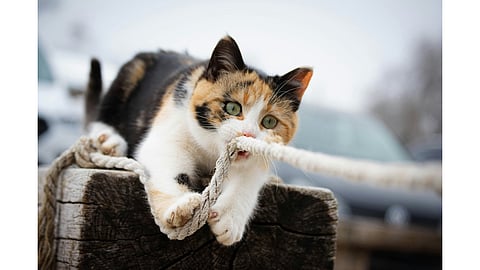
From whether cats really love us to why they are so obsessed with boxes, science has some surprisingly interesting answers about our feline friends. So, here are seven purr-fect cat facts, backed by research.
1. Blink first, ask questions later
Want to make friends with a cat? Try narrowing your eyes and blinking slowly. Scientists from the universities of Portsmouth and Sussex found that slow blinking can help build a rapport between cats and humans. The gesture appears to mimic what researchers describe as a cat smile, and may help strengthen the bond between the two.
2. Your cat might miss you more than it lets on
Cats may seem perfectly happy doing their own thing, but being left alone can affect some more than we realise. Research has found that certain cats show signs of distress when separated from their owners, from becoming unusually vocal or destructive to changes in their toilet habits and increased agitation. So while your cat may not greet you at the door with a dramatic welcome, it might still notice when you’re gone.
3. Your cat knows a storm is coming
Your cat may sense a storm before you hear the first rumble of thunder. Cats have sharp senses and they pick up changes that often go unnoticed by us, including shifts in atmospheric pressure and sounds at a distance. They may also detect the smell of approaching rain and even ozone, the gas produced when lightning strikes.
4. The box is basically a cat-sized sofa
There is a reason why cats love the hard cardboard box and not the expensive bed. Cats are solitary animals and sleep for up to 18 hours a day, and, they naturally seek out safe, enclosed places to rest. A cardboard box is small, cosy hiding spot where they can snooze undisturbed.
Another reason is that, cats are comfortable at temperatures considerably warmer than humans prefer. This is also the reason why they love sunny windowsills. And a snug cardboard box makes a perfectly good substitute too.
5. Cute, cuddly and surprisingly deadly
Cats' hunting instincts are very much alive at night. A study found that pet cats may kill two to 10 times more prey than similarly sized wild predators. And much of that hunting happens surprisingly close to home, with cats doing most of their roaming within roughly 100m of where they live.
6. Sorry, but your cat needs meat
Cats are adapted to getting essential nutrients from animal sources as they are obligate carnivores. Cats need taurine, an amino acid that aids in healthy vision and heart function. Unlike humans, cats cannot make enough taurine from plant-based ingredients alone. Your cat may eat curd rice, but that does not make him/her a vegetarian.
7. Those whiskers are serious business
Your cat’s whiskers are much more than facial decoration though they may look like a fashionable moustache. These thick, specialised hairs known as vibrissae are packed with nerves and help cats navigate their surroundings. Their whiskers can help them detect movement, judge spaces, and navigate in low light. So, the next time you catch yourself admiring those whiskers, remember they’re doing far more than making your cat look cute — they’re helping her navigate the world around her.
—manuvipin@newindianexpress.com
@ManuVipin
For more updates, join/follow our WhatsApp, Telegram and YouTube channels.