
- LIFESTYLE
- FASHION
- FOOD
- ENTERTAINMENT
- EVENTS
- CULTURE
- VIDEOS
- WEB STORIES
- SPORTS
- GADGETS
- CAR & BIKE
- TRAVEL
- SOCIETY
- GALLERIES
- NORTH EAST
- INDULGE CONNECT

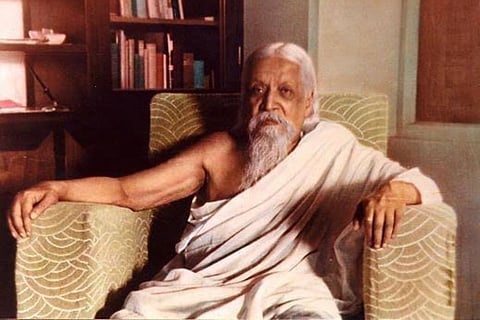
Pondicherry may be known for its French-colonial charm, Auroville, breezy beaches and effortlessly cool cafés, but there is one name that remains inseparable from the city’s spiritual identity: Sri Aurobindo.
For travellers exploring White Town, the Sri Aurobindo Ashram is one of those places that deserves more than a quick stop for a photograph. Located in the heart of the French Quarter, close to the popular Manakula Vinayagar Temple, the ashram is among Pondicherry’s most significant landmarks.
The experience begins at the entrance. Phones are switched off, conversations are kept to a minimum and visitors are gently guided through the space by volunteers. At the centre is the Samadhi, the flower-covered marble shrine where Sri Aurobindo and his spiritual collaborator, The Mother, Mirra Alfassa, are laid to rest. Devotees sit quietly around it, heads bowed in meditation. For a city that can otherwise be buzzing with tourists, the sudden stillness feels almost surreal.
Born in Calcutta on 15 August 1872, Sri Aurobindo was sent to England at the age of seven. He studied at St Paul’s School in London and later at King’s College, Cambridge, before returning to India in 1893. He spent thirteen years in Baroda, working for the Maharaja and teaching at Baroda College. It was here that he became increasingly involved in revolutionary activities and began practising yoga.
Following the Partition of Bengal in 1905, he moved to Calcutta and emerged as a leading figure in the nationalist movement. Through Bande Mataram, he openly called for complete independence from British rule. His political activities brought him under the scrutiny of the colonial government and led to several prosecutions.
Then, in 1910, everything changed. Sri Aurobindo withdrew from politics and travelled to Pondicherry. What began as a retreat from the political storm soon became a lifelong spiritual journey. Over the next forty years, he developed Integral Yoga, a philosophy that sought not merely to escape worldly life but to transform human consciousness and, ultimately, life itself. Pondicherry became his place to think, write and explore. Works such as The Life Divine, The Synthesis of Yoga and Savitri emerged from these years. With The Mother, he also built a spiritual community that formally became the Sri Aurobindo Ashram in 1926.
Today, you can walk through the same White Town streets, visit the ashram and browse its bookshop, where his ideas continue to reach readers in numerous languages.
Perhaps that is what makes Sri Aurobindo’s Pondicherry so compelling. Beneath the cafés, colourful doors and colonial façades is a city that gave a revolutionary the space to look inward — and, in doing so, changed the direction of his life.
For more updates, join/follow our
https://www.whatsapp.com/channel/0029Vb677uz60eBXiDYheb0n