
- LIFESTYLE
- FASHION
- FOOD
- ENTERTAINMENT
- EVENTS
- CULTURE
- VIDEOS
- WEB STORIES
- SPORTS
- GADGETS
- CAR & BIKE
- TRAVEL
- SOCIETY
- GALLERIES
- NORTH EAST
- INDULGE CONNECT

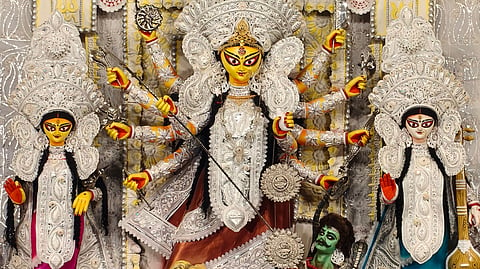
For centuries past, Bengalis have embellished their Goddess Durga with ornate jewellery in the festival of Durga Puja. One such form of ornamental style is Daaker Saaj, which is distinguished by its sparkling silver and white colours. According to the history of this form of decoration, it was named after the time when affluent families used to import metallic foil from Germany to embellish the idols.
Durga Puja was performed in the houses of rich Bengalis during the 15th and 16th centuries. At that time, the idols would be decorated with actual gold and silver jewellery belonging to the family heirlooms. The ornaments would be stripped away from the idol before taking it out for visarjan.
As a result, over time, two forms of idols have been particularly popular for their decoration: sholar saaj and Daaker Saaj. The sholar saaj is a kind of design created from shola, which is basically a soft and white product derived from marshy plants of India.
Daaker Saaj was part of a separate tradition. During the 19th and early 20th centuries, rich patrons, such as royal families like the Shobhabazar Raj family, would have imported glittering sheets of silver and white foil from Germany. This included tinsel foil of silver, locally known as rangta.
These foreign materials were alleged to have come through the post or the daak, which made people think of this art as being something that came by post; hence, it was named Daaker Saaj. The decoration also had the visual practical benefit that, before electricity became common, the home and the puja space would be lit by oil lamps. With the metallic foil catching and reflecting the flickering light, the Goddess appeared to glow.