
- LIFESTYLE
- FASHION
- FOOD
- ENTERTAINMENT
- EVENTS
- CULTURE
- VIDEOS
- WEB STORIES
- SPORTS
- GADGETS
- CAR & BIKE
- TRAVEL
- SOCIETY
- GALLERIES
- NORTH EAST
- INDULGE CONNECT

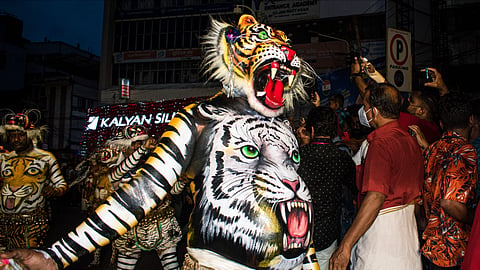
With the onset of the Dussehra season, it is time for the men and boys of Dakshina Kannada to undergo an elaborate metamorphosis. The paint job on their bodies includes colours like yellow, orange, black, and white stripes, which make them appear as tigers. Then they take to the streets to the beat of drums. This is Pilivesha, also known as Hulivesha or Piliyesa, a folk art of the Tulu Nadu region covering Dakshina Kannada and Udupi.
The tiger paint plays an important part in this tradition since it is believed that Goddess Durga rides on a tiger. This dance form is usually performed on the occasion of the Dussehra festival in Mangalore and Krishna Janmashtami in Udupi. The tiger dance is also performed along with the procession conducted at various temples like Kudroli Gokarnanatheshwara, Mangaladevi, Kateel Durgaparameshwari, Kudupu Ananta Padmanabha, and Sri Manjunatha Temple in Dharmasthala.
Painting the tiger is a time-consuming process. The dancers have to spend a considerable amount of time being painted, starting off with colours like yellow and white and then moving on to add the black stripes and facial decorations. Some of the groups have 30 or 40 dancers who wait in line to be painted.
In earlier times, colours were made from organic substances like roots, bark and soil. Oil paints and distemper are currently used. The paint can itch and sting, but performers accept the discomfort as part of their devotion, penance or wish fulfilment.
Pilivesha dances follow the rhythms of the music of thaase, chende and maddale, with accompanying cymbals and at times harmonium. The performance includes prowling and crouching movements along with leaping and lively actions. Fire breathing is an additional performance at some places.
It was basically a neighbourhood custom. The young boys would go from one house to another, doing some short acts and receiving gifts for feasts in the community. As time passed, there were large parades in the streets with the creation of stages. Currently, Pilivesha is part of Mangalore Dussehra festivities, children’s contests, and other cultural activities.
For more updates, join/follow our WhatsApp, Telegram and YouTube channels.