
- LIFESTYLE
- FASHION
- FOOD
- ENTERTAINMENT
- EVENTS
- CULTURE
- VIDEOS
- WEB STORIES
- SPORTS
- GADGETS
- CAR & BIKE
- TRAVEL
- SOCIETY
- GALLERIES
- NORTH EAST
- INDULGE CONNECT

The Kailash Mansarovar Yatra is considered one of the most profound spiritual journeys in the Himalayas, combining devotion, endurance and a rare experience of high-altitude landscapes. Among the available routes, the Nathu La Pass route through Sikkim is regarded as one of the more comfortable and accessible options, largely because much of the journey is motorable. Unlike the Uttarakhand route through Lipulekh, which involves extensive trekking, the Sikkim route reduces the physical strain while still offering a dramatic Himalayan passage.
However, travelling at extreme altitudes brings its own challenges. Reduced oxygen levels can cause hypoxia, which may lead to Acute Mountain Sickness. To ensure pilgrims adapt safely, the Government of India through the Ministry of DoNER, along with the Sikkim Government, has developed dedicated acclimatisation facilities in East Sikkim. The first major stop is the 18th Mile Centre, located at an altitude of 10,000 feet. This 126-bed facility includes modern rooms, an infirmary and dining areas. Pilgrims spend the first two mandatory rest days here, allowing their bodies to gradually adjust to the changing altitude before moving higher.
The next stage is the Hangu Lake/Tsomgo Centre, situated near Tsomgo (Changu) Lake and Hangu Lake. Here, travellers spend another two days resting and undergo final health assessments before proceeding towards the border. The final checkpoint is the Sherathang Security Gate, positioned at 13,500 feet, where pilgrims undergo a high-altitude medical examination. Only those who successfully receive medical clearance are permitted to cross into Tibet.
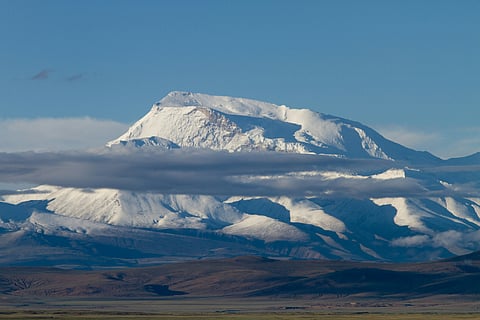
Managed through the logistical coordination of the Ministry of External Affairs and the Sikkim Tourism Development Corporation, the route is carefully planned, offering not just a pilgrimage but also a journey through Sikkim’s scenic landscapes and the historic gateway into Tibet. The adventure begins in Gangtok, the capital of Sikkim, where pilgrims assemble, attend official briefings and prepare their equipment. The route then passes through the serene Tsomgo (Changu) Lake, a sacred alpine water body surrounded by snow-covered peaks. Nearby lies the shrine of Baba Harbhajan Singh, the legendary Indian Army soldier who continues to be revered by many. The final Indian landmark is Nathu La Pass, located at 14,140 feet on the Indo-China border. This historic mountain pass serves as the gateway where pilgrims cross international gates and transition into Chinese vehicles for the onward journey.
The Yatra is open to Indian citizens between the ages of 18 and 70. Applications are submitted online through the MEA portal, with pilgrims selected through a computerised lottery system. The journey, held between June and August, costs approximately ₹1.80 lakh to ₹2 lakh, covering transportation, accommodation, meals, guides and permit fees on both sides of the border. While Sikkim’s Himalayan regions generally experience temperatures between 5°C and 20°C during the season, Tibet’s conditions are far harsher, with nights around Mount Kailash often dropping below freezing, reaching around -5°C.
For more updates, join/follow our WhatsApp, Telegram and YouTube channels.