
- LIFESTYLE
- FASHION
- FOOD
- ENTERTAINMENT
- EVENTS
- CULTURE
- VIDEOS
- WEB STORIES
- SPORTS
- GADGETS
- CAR & BIKE
- TRAVEL
- SOCIETY
- GALLERIES
- NORTH EAST
- INDULGE CONNECT

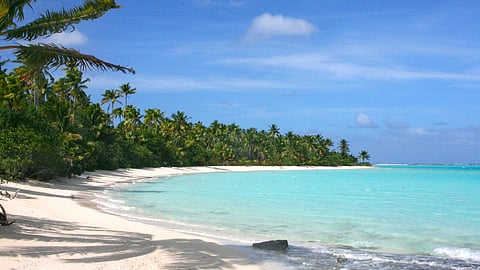
The Cook Islands occupy an enviable corner of the South Pacific, where the lagoons look unimaginably blue and the pace of life has yet to submit to the tyranny of the clock. The country is made up of 15 islands, has no traffic lights and keeps its buildings low enough to preserve the coconut-tree skyline. It also has no land snakes, so you don’t have to worry about one slithering near you at night.
Land in the Cook Islands is held under customary Māori ownership, passed through families and generations. Freehold land sales are prohibited, although land can be leased for commercial use. A developer cannot simply arrive, buy a stretch of ancestral coastline and proceed as though the place were an empty parcel on a property portal. Commercial projects must contend with local land rights, lease arrangements and the interests of the families who hold the land. Foreign investment is possible, but ownership comes with legal and cultural conditions.
For visitors, Rarotonga is the obvious place to begin. Muri Lagoon is a stretch of translucent water scattered with four small motu, where a kayak or glass-bottom boat gets you out among the reef. A short flight north of Rarotonga, Aitutaki is home to a vast lagoon where the water shifts between pale aquamarine and deep turquoise, broken by white sandbars and tiny coral islets. A full-day vaka cruise takes you across the lagoon to Tapuaetai, better known as One Foot Island. Its name comes from a local legend about a father who concealed his son's footprints with his own to save him from pursuing warriors. The island carries that story in its name, alongside the white sand and coral gardens that draw visitors ashore.
Back on Rarotonga, the Cross-Island Track climbs through dense rainforest towards Te Rua Manga, a jagged rock pinnacle that thrusts out of the island's mountainous interior. Its silhouette, a narrow spire of exposed rock against the green canopy, has earned it the name The Needle. Saturday mornings are best spent at Punanga Nui Market in Avarua, where black pearls catch the light, artisans display hand-stitched tivaevae quilts and vendors sell the morning's produce.
The food is where the islands get interesting. Ika mata is raw fish, usually tuna or marlin, given a brisk cure in lime juice before being dressed in coconut cream. The citrus does the initial heavy lifting; the coconut rounds it off. It is fresh, rich and simple. An umu feast has meat, fish and root vegetables buried in an earth oven, cooked over hot stones and left to emerge smoky, tender and fragrant. This is food that takes its time. You should, too