
- LIFESTYLE
- FASHION
- FOOD
- ENTERTAINMENT
- EVENTS
- CULTURE
- VIDEOS
- WEB STORIES
- SPORTS
- GADGETS
- CAR & BIKE
- TRAVEL
- SOCIETY
- GALLERIES
- NORTH EAST
- INDULGE CONNECT

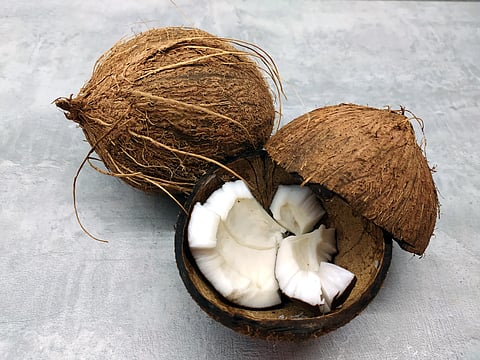
Coconut is one of those ingredients that rarely goes to waste. The water is drunk, the flesh is grated, the milk is pressed, the oil is fried in, the sap becomes sugar or vinegar and the shell ends up as a ladle or as fuel. Whether a coconut finishes in a curry, a pot of rice or a pot of beans depends less on the coconut than on who is holding the grater.
That makes it a useful ingredient to follow around the tropics.
The coconut's own journey is older than most of the dishes made with it. Genetic research suggests it was domesticated twice, once in island Southeast Asia and once around southern India and Sri Lanka. Austronesian sailors later carried Pacific coconuts as far as Madagascar and the East African coast. Much later, Portuguese traders took Indian Ocean coconuts to West Africa, from where they reached the Caribbean and Brazil.
In Kerala, coconut appears in almost every form at once. It is grated into a thoran of stir-fried vegetables, ground with spices into curry pastes, pressed into the milk that softens a stew served with appam, and turned into the oil in which much of it is cooked. The grater is part of the household rhythm, usually a serrated blade fixed to a low stool or block, and the sound of it is often the first sign that lunch has begun.
Across the water in Sri Lanka, kiribath, rice cooked in thick coconut milk, is made for New Year and other auspicious mornings. Further east, the cooking changes again. Thai cooks heat coconut cream until its oil separates, then fry curry paste in it. In West Sumatra, rendang is simmered in coconut milk for hours until the liquid disappears and the meat begins to fry in what is left. In the Philippines, anything cooked in coconut milk, or gata, can become a ginataan.
On the Swahili coast of East Africa, coconut sits quietly at the centre of everyday meals. In Zanzibar and Mombasa, wali wa nazi is rice cooked in coconut milk, and beans, fish and vegetables are often simmered the same way. The traditional grater is a small wooden stool with a blade at one end, called a mbuzi, the Swahili word for goat, because the cook sits astride it. Further south in Mozambique, matapa combines pounded cassava leaves with ground peanuts and coconut milk.
West Africa took coconut in a sweeter direction. In Ghana and Nigeria, coconut rice is a familiar party dish, while grated coconut cooked with sugar becomes a chewy street-side sweet.
The Caribbean uses coconut milk mostly as a cooking liquid, and patiently. In Jamaica, rice and peas is cooked with kidney beans, thyme and coconut milk. Rundown, a fish stew, is simmered until the coconut milk reduces into a thick, oily sauce. Grenada's oil down is built on the same idea at a larger scale: breadfruit, salted meat, dumplings and greens are layered in a pot and cooked in coconut milk until nothing but a film of oil remains at the bottom.
The easiest way to read a coconut dish is to look at the coconut itself. Notice whether the coconut is grated, pressed, fried or simmered. Ask whether it is meant to be tasted or simply to carry everything else. The answer usually says something about what grew nearby and what the cook had time for.
A coconut can contain quite a lot of history. Follow it far enough and you end up at the grater, the pot and the coastlines that passed it along.
For more updates, join/follow our WhatsApp, Telegram and YouTube channels.