
- LIFESTYLE
- FASHION
- FOOD
- ENTERTAINMENT
- EVENTS
- CULTURE
- VIDEOS
- WEB STORIES
- SPORTS
- GADGETS
- CAR & BIKE
- TRAVEL
- SOCIETY
- GALLERIES
- NORTH EAST
- INDULGE CONNECT

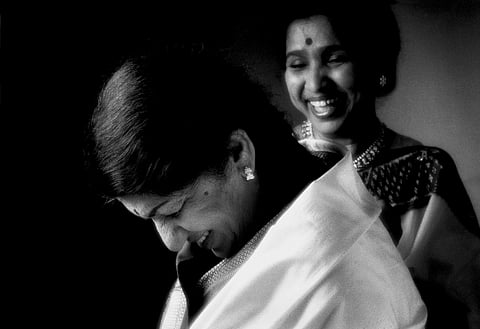
Walk into Marathi Chitrapat: Stories and Stardom at the National Gallery of Modern Art (NGMA), Mumbai, and you’ll find much more than photographs lining gallery walls. You’ll encounter fragments of a century-long story—of actors and filmmakers, of changing cultural landscapes, and of a city that grew alongside its cinema. From rare portraits of Marathi screen legends to intimate archival images that capture moments behind the scenes, the exhibition serves as a visual journey through Maharashtra's cinematic heritage and Mumbai’s evolving identity.
Conceptualised by IAS officer Nidhi Choudhari, Director of NGMA Mumbai, and curated by archivist Neha Kamat of Kamat Foto Flash, the exhibition traces Marathi cinema's remarkable journey from its pioneering beginnings to the present day. Yet, at its heart, the show asks a larger question: what does it mean to preserve memory?
In an exclusive conversation with Indulgexpress, curator and archivist Neha Kamat, photographer Shiresh R. Karale and actor Nehha Pendse reflected on memory, heritage and the enduring story of Marathi cinema.
For Neha Kamat of Kamat Foto Flash, the exhibition is about much more than showcasing familiar faces from Marathi cinema.
“For me, curating Marathi Chitrapat: Stories and Stardom was not simply an exercise in selecting iconic photographs; it was about constructing a visual narrative of Maharashtra’s cinematic and cultural journey,” she says.
Kamat explains that her approach was to look beyond star portraits and well-known film stills to spotlight the people, moments and creative processes that shaped Marathi cinema. Drawing from the Kamat Foto Flash archive and contributions from several photographers and archivists, the exhibition traces how Marathi cinema has evolved while remaining rooted in its cultural identity.
As she notes, photographs are living documents" that capture the aspirations, aesthetics and social realities of their time. For younger generations, they become a bridge to a shared heritage, ensuring that the legacy of Marathi cinema remains accessible and relevant.
Among the photographers featured in the exhibition is Shiresh R. Karale, whose relationship with Marathi cinema is deeply personal.
“When I look at these old Marathi cinema photographs, I am transported back nearly forty years,” he recalls. Growing up in the home of noted drama and film critic Rajabhau Karale, he remembers artists, actors and musicians regularly gathering to discuss films, theatre and music.
As he later became a photographer himself, many of these personalities sat before his camera. “Looking at these photographs today feels like reopening a treasured family album filled with memories of an extraordinary cultural era,” he says.
Karale believes exhibitions such as Marathi Chitrapat help younger audiences connect with Mumbai’s cultural past. “Such exhibitions are not merely displays of images; they are a celebration of collective memory and a bridge between generations,” he says.
For actor Nehha Pendse, whose portrait features in the exhibition, the experience is both humbling and affirming.
“There are days when you question whether you have done enough, and then there are days that quietly remind you that you have come far enough,” she reflects.
Even as she describes herself as “just a speck of dust in the vast universe of the film industry,” Pendse says she feels "overwhelmed and honoured to be a small part of it." Being included in an exhibition that chronicles over a century of Marathi cinema, she adds, has only inspired her “to do better.”
Together, these voices reveal the many ways in which Marathi Chitrapat functions—as an archive, a memory bank and a living conversation between past and present. More than a tribute to Marathi cinema, it is a reminder that photographs preserve not only images, but also the stories and cultural histories that continue to shape Mumbai today.
Where: Dome Gallery, National Gallery of Modern Art (NGMA), Mumbai
When: Till July 31, 2026
For more updates, join/follow our WhatsApp, Telegram and YouTube channels.