
- LIFESTYLE
- FASHION
- FOOD
- ENTERTAINMENT
- EVENTS
- CULTURE
- VIDEOS
- WEB STORIES
- SPORTS
- GADGETS
- CAR & BIKE
- TRAVEL
- SOCIETY
- GALLERIES
- NORTH EAST
- INDULGE CONNECT

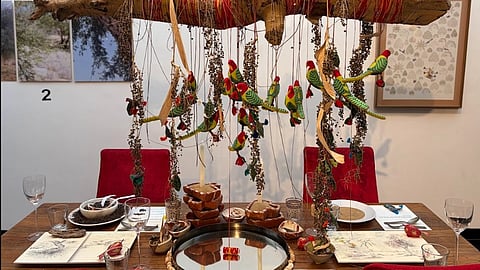
This unique exhibition displays the often overlooked traditions from the soil and presents them in a manner that is contemporary, juxtaposing shared memories, modern dialogues and interactive foundations. Curated by Shailja G. Negi from Alliance Francaise de Delhi, it is home to installations that are rooted to the soil and speak about community-led practices, explorations of landscapes and their traditions through everyday materials, crafts and practices. The exhibition is also part of the 70th anniversary celebration of the institution.
At a time when dialogues about the environment are consciously on the rise, the exhibition comes focussing on caring, repairing, and taking collective responsibility for a better future. The installation, Bachpan Ki Dukaan, complete with replicas of childhood candies and food takes one back to the very beginning. In the tide of growing up, one often forgets to slow down and remember their childhood. Friendships that were born out of these anecdotes, comical fights that erupted over food, the choice of meal and how neighbourhood food stalls influenced them, how they were always the solution for parents when the child was being naughty at a time when digital devices weren’t the answer, these individual recollections is what makes this installation unique.
Nature worship forms an integral part of the social communities of the country. People worship and thank Nature Gods when there is abundance to protect and preserve it. People also worship Nature for the want of natural resources so that their basic daily requirements and crop yields are met. Oran is a reflection of these scared groves from the Thar desert of Rajasthan. It focuses on community-led conservation and how traditional beliefs merge in creating resilient landscapes.
Spotlighting the indigenous art practices of the rural women of Haryana is Dr Asha Kumari’s Bitoda Art. It is an overlooked rural practice where the women of the house make geometrical clay structures called Bitodas which store fuel cakes. It also shows the how age-old traditional practices are still revives in the communities and how with time they begin to show signs of slight evolution.
Long before electricity came, West Bengal had derived the Hat Pakha. Made with bamboo and palm leaves, these were not just an object of utility but a chance to show sheer craftsmanship, status, cultural reflections and promote ecological balance. With advances like air conditioner, air coolers and electric fan, the Hat Pakha is no longer used for its actual purpose, but it is still a significant part of Bengal’s cultural fabric. This has been upheld by Abishi Sarkar in this installation.
What: De la Terre à l’Âme (From Soil to Soul),
Where: Galerie Romain Rolland, Alliance Française de Delhi
When: till June 30, 2026
For more updates, join/follow our WhatsApp, Telegram and YouTube channels