
- LIFESTYLE
- FASHION
- FOOD
- ENTERTAINMENT
- EVENTS
- CULTURE
- VIDEOS
- WEB STORIES
- SPORTS
- GADGETS
- CAR & BIKE
- TRAVEL
- SOCIETY
- GALLERIES
- NORTH EAST
- INDULGE CONNECT

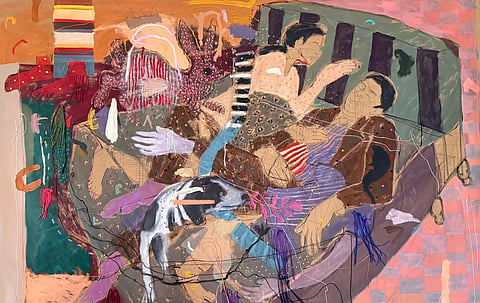
Artist Rinku Choudhary’s solo exhibition, A Soliloquist’s Journal, presented by Art Incept and curated by Prima Kurien, brings together a body of paintings that explores memory, domesticity, identity and the quiet repetition of emotions that shape everyday life.
The artist brings an intimate and deeply personal perspective to domestic life, transforming everyday household experiences, memories and relationships into a visual exploration of identity, emotional restraint and the unseen dynamics within the home.
Rinku’s practice is rooted in her own experiences of growing up in a large joint family. Restrictions placed on her movements because of her gender, including not being allowed to venture outdoors after dusk, became an early point of observation. Over time, members of her family and the household itself became subjects through which she began examining the complex emotional structures of domestic life.
A significant conceptual influence on her work is British psychoanalyst D. W. Winnicott and his distinction between the “true self” and the “false self.” This idea finds expression in her spontaneous gestures, overlapping figures and fragmented marks. Her recurring image of a woman seated loosely on a chair, together with bursts of marks resembling scattered thoughts, suggests an interior world constantly negotiating between expression and restraint.
Her visual vocabulary draws from a wide range of artistic influences, including Mary Cassatt’s intimate portrayals of women, Arpita Singh’s figurative and folkloric language, and the expressive use of colour and form associated with Paul Klee, Wassily Kandinsky and Tyeb Mehta. Personal memories also occupy an important place in her work. Birds from the terrace of her childhood home in Delhi-6 and the memory of a beloved dog repeatedly appear as emotional and symbolic markers of time, belonging and remembrance.
The pandemic further intensified Rinku's engagement with the domestic sphere. As homes became spaces of prolonged confinement and introspection, she observed the repetitive routines of women around her—wives, mothers and caregivers whose emotional labour, often invisible, suddenly became more apparent. These observations found their way into her work as psychological traces rather than literal narratives.
“Rinku’s work ultimately presents a quiet yet compelling form of contemporary feminism. Rather than making overt social statements, she allows the structures of domestic life to speak through gesture, composition, colour and absence. Her paintings invite viewers to look beyond the familiar and recognise the emotions, memories and silences that exist beneath the surface of everyday life”, adds curator Prima Kurien.
When: On till September 9
Where: Shridharani Gallery, Tansen Marg, New Delhi
For more updates, join/follow our WhatsApp, Telegram and YouTube channels.