
- LIFESTYLE
- FASHION
- FOOD
- ENTERTAINMENT
- EVENTS
- CULTURE
- VIDEOS
- WEB STORIES
- SPORTS
- GADGETS
- CAR & BIKE
- TRAVEL
- SOCIETY
- GALLERIES
- NORTH EAST
- INDULGE CONNECT

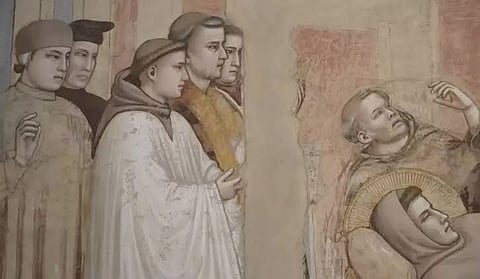
A magnificent cycle of frescoes by the 14th-century Italian master Giotto has been unveiled following a meticulous four-year restoration. Depicting key moments in the life of St. Francis of Assisi, the newly vibrant artworks were revealed to the public last week in Florence’s Basilica of Santa Croce. This debut arrives just in time for the 800th anniversary of his death on October 4.
Giotto, who died in 1337, is widely celebrated as the father of European painting. His artistic innovations heavily influenced the Renaissance style that followed. Painted between 1317 and 1325, these masterpieces adorn a side chapel in the basilica and have now regained their original richness. The recent conservation efforts offer fresh insights into the revolutionary techniques of the revered painter.
Emanuela Daffra, superintendent of the Opificio delle Pietre Dure, explained that the restoration stripped away layers of film and subsequent additions that had obscured Giotto’s original vision. Emanuela noted that the works now show his “profound capacity for expression.”
“Today, we can clearly interpret the gazes,” she remarked about the various figures in the scenes. “He knew how to orchestrate them within spaces that emphasised the meaning of the scenes.”
Over the centuries, the frescoes suffered from changing tastes and poor interventions. Covered by several layers of 18th-century lime whitewash, they were partially uncovered in 1851 in a process that caused further damage. They underwent additional repairs in the 1950s before this latest project began in 2022. Using thermal cameras, a laser scanner and an innovative device for ground-penetrating radar analysis, experts consolidated fragile areas and replaced synthetic grouting with period-appropriate plasterwork.
Covering roughly 180 square metres within the Bardi Chapel, the murals recount seven crucial episodes in the life of Francis. The scenes highlight milestones including his renunciation of worldly goods, the Franciscan Rule's approval and a famed trial by fire before the Sultan of Egypt.
Originally commissioned by the powerful Bardi banking family, the chapel’s legacy of patronage continues today. Around 250 private donors contributed 700,000 euros towards the 1.3 million euro project, ensuring this cultural treasure remains vibrant.
For more updates, join/follow our WhatsApp, Telegram and YouTube channels.