
- LIFESTYLE
- FASHION
- FOOD
- ENTERTAINMENT
- EVENTS
- CULTURE
- VIDEOS
- WEB STORIES
- SPORTS
- GADGETS
- CAR & BIKE
- TRAVEL
- SOCIETY
- GALLERIES
- NORTH EAST
- INDULGE CONNECT

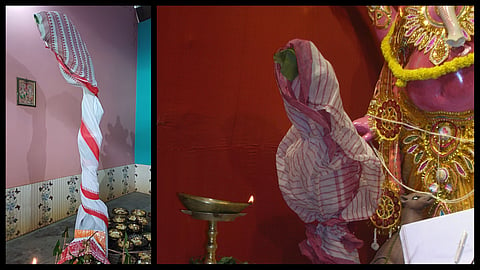
Every year, as Durga Puja pandals come alive with dhak beats and the scent of incense, a ritual unfolds that leaves first-time visitors scratching their heads: a banana plant, wrapped in a red-bordered white sari, is ceremonially bathed in the Ganges and placed right beside Lord Ganesha's idol. Locals call her Kola Bou — literally, ‘the banana bride’. But before you assume she's Ganesha's wife, she isn't a bride at all. She's the Goddess herself, in disguise.
The banana plant is actually just one member of a nine-plant ensemble called Nabapatrika, meaning nine leaves. On Saptami nine different plants are bundled together with a branch of the aparajita creeper, given a ritual bath, and worshipped as a collective embodiment of Navadurga, the nine forms of the goddess.
The lineup includes turmeric, colocasia, jayanti, wood apple, pomegranate, ashoka, arum, and paddy — each one symbolising a different facet of divine feminine energy. And standing tallest among them, quite literally, is the banana plant.
It's the face of the goddess Brahmani. Within the Nabapatrika, the banana plant specifically represents Brahmani, one of the Matrikas or mother-goddess forms associated with Durga's shakti. Practically speaking, the banana plant's size and sturdy trunk make it the natural anchor for tying the other eight plants together. That's why it becomes the visible body of the entire arrangement — the one that gets dressed in a sari and bathed alongside the main idol, while the other eight plants remain tucked into the bundle. In Indian tradition, banana plants have long been linked to fertility and prosperity. They fruit generously and repeatedly, making them a natural stand-in for a goddess associated with protection and abundance.
Because Kola Bou translates to ‘banana bride’ or ‘banana wife’, many assume she’s literally married to Ganesha, placed beside him as his consort. In truth, her position near Ganesha is a matter of ritual arrangement, not marital status.
It's a charming case of a name getting lost in translation over generations, turning a profound symbol of the goddess into folklore about a mismatched marriage.
For more updates, join/follow our WhatsApp, Telegram and YouTube channels.