
- LIFESTYLE
- FASHION
- FOOD
- ENTERTAINMENT
- EVENTS
- CULTURE
- VIDEOS
- WEB STORIES
- SPORTS
- GADGETS
- CAR & BIKE
- TRAVEL
- SOCIETY
- GALLERIES
- NORTH EAST
- INDULGE CONNECT

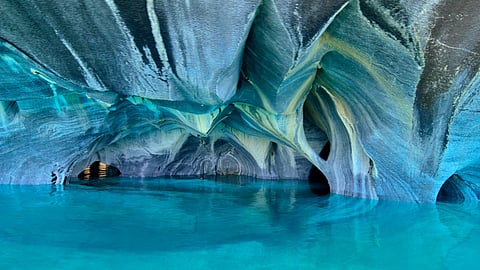
Nature, left to its own devices for a few million years, can develop some extravagant tastes. The Marble Caves of Chile are proof. Along the shores of General Carrera Lake in Patagonia's Aysén region, enormous deposits of marble have been shaped by thousands of years of water erosion, forming caverns, arches and sinuous passageways.
Known locally as Capillas de Mármol, the formations have been shaped over millennia by the waves of General Carrera Lake. The water has steadily eroded the calcium carbonate rock, smoothing its surfaces and excavating chambers through the marble. Mineral veins curl across the walls in elaborate patterns of white, grey and blue-grey. The glacial waters of the lake shift between turquoise and deep blue, casting their colour against the pale marble walls. The three principal formations are the Marble Cathedral, the Marble Chapel and the Marble Cave. The Cathedral, with its vaulted chambers and sculpted pillars, is the grand dame of this geological enterprise.
Getting inside requires a boat. Excursions depart from Puerto Río Tranquilo, a small lakeside settlement that serves as the gateway to the caves. Motorboat tours take around two hours, bringing visitors close to the formations and through accessible arches when water levels permit. Kayaking requires more stamina, but lets you paddle into narrower passages, where the marble walls close in around you. A paddle, a competent guide and a willingness to get a little wet are useful investments.
Sunlight brings out the lake's extraordinary colour and the marble's intricate veining; under an overcast sky, the whole palette loses its punch. November to March is the main visiting season, while spring and autumn can bring lower water levels that allow boats to enter some of the caverns. Patagonian weather, however, is an unreliable travel companion. Wind can cancel excursions, so spend at least two nights in Puerto Río Tranquilo and keep a spare morning in reserve.
Give yourself time to explore the Aysén region. The Carretera Austral winds through a rugged expanse of lakes, mountains and remote settlements, making the drive as memorable as the destination. In Puerto Río Tranquilo, look out for Patagonian lamb, southern hake (merluza austral) and cazuela, a comforting Chilean stew of meat, vegetables and broth. Local seafood also features on menus, while vegetarian travellers should plan meals ahead, as options in this small rural town can be limited.
The lake can turn choppy without warning, so listen to your guide, wear your life jacket and leave the marble untouched. This is a protected natural sanctuary, not a souvenir shop. The caves may be what brings you to Patagonia, but the long road through Patagonia, the meal waiting at the end of it and the sheer geological audacity of the place give you plenty of reasons to extend your stay.
Email: anoushkakundu@newindianexpress.com
For more updates, join/follow our WhatsApp, Telegram and YouTube channels.