
- LIFESTYLE
- FASHION
- FOOD
- ENTERTAINMENT
- EVENTS
- CULTURE
- VIDEOS
- WEB STORIES
- SPORTS
- GADGETS
- CAR & BIKE
- TRAVEL
- SOCIETY
- GALLERIES
- NORTH EAST
- INDULGE CONNECT

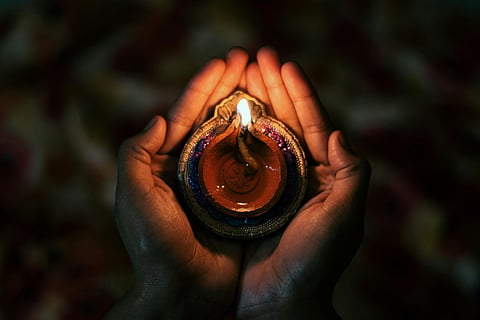
When we think of Halloween, we often imagine spooky masks and haunted nights, but did you know India has its own ritual that might just have a similar eerie history? Meet Yama Deepam, celebrated on Dhanteras during Diwali, it’s when people worship Yama, the god of death, lighting lamps often with a four‑faced diya or wheat‑flour lamps to seek protection from untimely death and ask for longevity.
Dhanteras, celebrated two days before the main Diwali festival is a ritual filled with buying gold, silver, utensils and even a broom. Buying these or mostly anything on Dhanteras is believed to bring good fortune, so if your luck’s been dodgy, maybe it’s time to shop well this Diwali! During this similar period, another ritual Yama Deepam is diversely followed.
It is said to be dedicated to the God of Death, Lord Yama. The main motive is to ward off untimely death, negative energies, and to bring protection, longevity, peace, and well‑being for the family.
Now let’s get into a bit of mythology. The Hindu myth says: a long time ago in King Hima’s kingdom, a terrible fate awaited his son. A prophecy said he would die from a snakebite on the fourth night after his marriage. But then came his bride, who didn’t accept that destiny. She came as the saviour and lit lamps and placed gold/silver outside the house, which eventually prevented the God of death, Yama, from entering the house and miraculously saved her husband. Talk about a superwoman move!
Lamps play the most crucial role here for this reason. Today, the lamps are lit in the evening of Dhanteras. Devotees also sprinkle Gangajal, offer prayers, chant mantras, and perform with pure faith.
The basic ritual of lighting lamps to guide spirits during a time when the veil between the living and the dead is believed to be thin is what connects these two traditions. At their core, both serve as a way to acknowledge death and honour the unknown, hoping to delay or prevent it from coming too soon.
For more updates, join/follow our WhatsApp, Telegram and YouTube channels.