
- LIFESTYLE
- FASHION
- FOOD
- ENTERTAINMENT
- EVENTS
- CULTURE
- VIDEOS
- WEB STORIES
- SPORTS
- GADGETS
- CAR & BIKE
- TRAVEL
- SOCIETY
- GALLERIES
- NORTH EAST
- INDULGE CONNECT
When eight pieces of the French crown jewels were whisked out of the Louvre in a matter of minutes last Sunday, the shock was immediate and international. But for one man — a former master burglar-turned-comedian — the only surprise was that it took this long. David Desclos, once infamous for disarming alarm systems and tunnelling into bank vaults, says he explicitly warned the museum of glaring vulnerabilities years ago, only to be brushed aside.
The theft took place in broad daylight at opening time inside the historic Apollo Gallery. Two intruders wearing high-visibility jackets reportedly smashed a street-facing window before powering open two display cases and fleeing with items valued in some reports at more than $100 million. A damaged ninth piece — Empress Eugénie’s diamond crown — was found discarded just outside the museum walls.
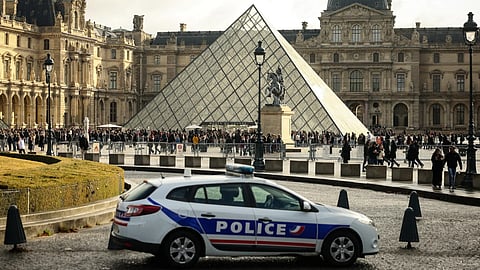
Speaking to the Associated Press outside I.M. Pei’s glass pyramid, Desclos said the heist unfolded exactly as he had long predicted. Invited in 2020 to take part in an in-house Louvre podcast discussing a major jewel theft from 1792, he claims he privately pointed out the same windows and display cases as weak spots, describing them as “a piece of cake” for seasoned criminals.
“You can slip in from the roofs, through the window, in disguise — there are many entry points,” he said. In his view, the timing was no coincidence either. “If you hit at opening time, the first alarm layer is neutralised. You know you’ve got five to seven minutes before police arrive. That is all you need.”
According to him, smash-and-grab operations are less about improvisation and more about choreography: blueprinting a route, rehearsing movements, and even timing yourself with a stopwatch. He believes recent renovations actually made the gallery more vulnerable. The older vitrines were designed so that priceless objects could drop to safety if tampered with; newer cases, though technically up to modern standards, hold artefacts at easy reach once broken open.

“It’s incomprehensible,” he said. “You are supposed to make access more difficult, not more convenient.”
The Louvre, for its part, has pushed back at the criticism, insisting that its newer cases are more secure and compliant with contemporary safeguards. The museum did not respond immediately to requests for further comment following Desclos’ claims. The AP has verified his appearance on the 2020 podcast, though not whether he relayed warnings privately to museum staff.
Desclos’ own story borders on cinematic. Raised in Caen, Normandy, he began stealing food as a child before graduating to department stores, then banks. In the late 1990s, he and accomplices famously tunnelled through a sewer network to break into a Société Générale vault. After serving time, he reinvented himself as a stage performer, using his past as material for a one-man show titled Hold-Up. Now, instead of casing banks, he spends nights on tour recounting them.
Yet despite his expertise, he says he has no personal knowledge of the Louvre thieves and no insight into where the stolen items might be. His outlook, however, is grim. Once jewels go missing, he explained, they are usually dismantled quickly, their gems sold anonymously on the global market. The sculptures, crowns and historical mountings — what give them heritage value — are almost never recovered.
Authorities in France are now facing growing questions about museum security. The Paris Police Chief is expected to brief the Senate this week in a session examining vulnerabilities across the capital’s cultural institutions. Pressure had already been mounting: in June this year, a spontaneous staff strike had temporarily shut the Louvre, with employees citing overwhelming crowds and chronic understaffing among their grievances.
For Desclos, the lesson is painfully obvious. “The originals should be vaulted,” he said. “You display replicas, you protect the real ones.” French media report that, in the wake of the heist, the remaining crown jewels have been transported to deep vaults inside the Banque de France — alongside national gold reserves and Leonardo da Vinci’s notebooks.
“They should have listened,” he said — a warning, now bruisingly fulfilled.
For more updates, join/follow our WhatsApp, Telegram and YouTube channels.