
- LIFESTYLE
- FASHION
- FOOD
- ENTERTAINMENT
- EVENTS
- CULTURE
- VIDEOS
- WEB STORIES
- SPORTS
- GADGETS
- CAR & BIKE
- TRAVEL
- SOCIETY
- GALLERIES
- NORTH EAST
- INDULGE CONNECT
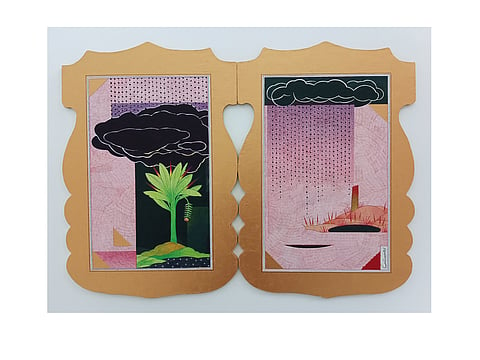
Ojas Art presents Musawwari: Miniatures Today, an exhibition dedicated to the rich tradition of South Asian miniature painting. Curated by Khushboo Jain, this exhibition brings together an international group of artists who explore the contemporary relevance of this intricate art form while honoring its deep historical roots.
The term musawwari traces its origins to Persian, denoting the traditional style of painting associated with miniatures in South Asia. During the colonial period, this art form came to be known as "miniature painting," but its essence goes far beyond the scale. For centuries, musawwari has represented a form of artistic storytelling, marked by exquisite detail, vibrant color palettes, and themes ranging from mythological narratives to royal life.
Historically, musawwari has been fluid, constantly engaging with different cultures and artistic influences. Persian styles, Chinese landscapes, and Central Asian figures have all left their mark on this art form, creating a rich tapestry of visual language. This cross-cultural exchange allowed artists to blend tradition with innovation, which continues to shape musawwari to this day.
The exhibition showcases works by about 20 artists from across the globe, representing regions such as Europe, North America, Ecuador, South Asia, and the Middle East.
The names include Alexander Gorzliki, Amaranta Pena, Amjad Ali Talpur, Annelie Solis, Ayesha Gamiet, Divya Pamnani, Gargi Chandola, Jethro Buck, Keerat Kaur, Linda Edwards, Maha Ahmed Qureshi, Mahaveer Swami, Manish Soni, Maryam Baniasadi, Murad Khan Mumtaz, Pavan Kavitkar, Rajnish Chhanesh, Saira Wasim, SM Khayyam, Vaishali Prazmari, Vinita Sharma, and Yasmin Hayat.
These artists draw inspiration from traditional miniature painting techniques while introducing modern elements that speak to today’s global context. In doing so, they emphasize how musawwari transcends geographic and cultural boundaries, evolving into a pluralistic art form that remains relevant and inspiring.
In today’s world, musawwari is not a relic of the past but a dynamic medium for artistic expression. The exhibition highlights the way contemporary artists engage with this ancient tradition, demonstrating how they reinterpret its techniques, motifs, and aesthetics for modern audiences. By linking the past with the present, these artists bring forth new iconographies, reflecting global cultural dialogues.

“For centuries, miniature art has symbolized various things: the wealth and power of patrons, the impact of colonialism, and later, as a symbol of anti-colonialism when adopted by local artists,” says curator Khushboo Jain. “Today, it serves as a symbol of cultural resilience and creativity, offering a platform for contemporary artists to explore new narratives. Musawwari continues to be a vital form of expression, evolving with time while retaining its core essence.”
Anubhav Nath, Curatorial Director of Ojas Art, adds: “This exhibition brings together a diverse group of artists to showcase the enduring relevance of musawwari. The works on display highlight how tradition can inspire innovation. Instead of constraining artistic freedom, traditional forms like musawwari provide a fertile ground for contemporary artists to push boundaries and explore new ideas.”
The exhibition invites viewers to look beyond the revival of miniature painting and into its dynamic and ever-evolving nature. Rather than merely preserving tradition, the artists on display reinterpret and reimagine it, creating new connections between historical techniques and contemporary themes. Through their works, they challenge the notion that tradition is static and instead celebrate its fluidity and adaptability.
Musawwari: Miniatures Today offers an opportunity to explore how this time-honored art form continues to inspire new generations of artists, who bring fresh perspectives to a centuries-old tradition.