
- LIFESTYLE
- FASHION
- FOOD
- ENTERTAINMENT
- EVENTS
- CULTURE
- VIDEOS
- WEB STORIES
- GALLERIES
- GADGETS
- CAR & BIKE
- SOCIETY
- TRAVEL
- NORTH EAST
- INDULGE CONNECT
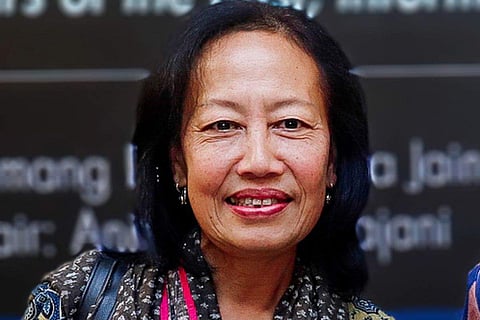
Mamang Dai is often considered among India’s most evocative contemporary writers in English. Hailing from Arunachal Pradesh, the poet and writer reflects the rhythms of the oral tradition of her Adi tribe in her verses and the natural landscapes of the northeast to which she is so attached.
Her latest book of poetry, The White Shirts of Summer, scheduled for release on November 10, was conceived amidst the stillness of the lockdown and reflects Dai’s evolving ecological concerns as well as the simplicity of everyday life.
“It was a long time coming. During COVID-19, we kind of stopped writing and these poems were scattered in my mind. So I thought this time I must bring them together. I was veering more towards ecological concerns and my feelings about pets, my pets, and the garden,” she chuckles as she juxtaposes the early reviews of the book deeming her work ‘lyrical and seamless’ against her intent.
“It’s about trying to get away from that image that has been created for most of the northeast. There’s that beauty of it, but there’s also more. And, I guess, it’s difficult to say what we’re trying to express even though the whole point of writing is to find out what we’re trying to express to get to the core of being who we are.”
The book’s release comes fresh on the heels of Dai’s recent accolade as the Poet Laureate at the Tata Literature Live 2023, held between October 26 and 29 in Mumbai. “I have two collections of poems. So it’s not a great number of books of poetry. But being acknowledged for poetry is highly prized for me,” she says adding, “We keep changing but it’s just the joy and struggle of writing that goes on. So awards are little milestones, I guess. But otherwise, you don’t want to diminish the joy of writing by thinking about a collection of awards or anything like that.”
Nevertheless, Dai feels the recognition is an important milestone in northeastern representation in India’s literary landscape. “There are students here from the northeast, a lot of young people or aspiring writers, so that gives them a fillip. Even before the news was out because I was travelling out of the country, social media posts were coming from young writers in Arunachal Pradesh about the award. So people are quite alert that way to the literary landscape of the country,” she adds.
The first woman to be selected for IAS from her state, Dai was awarded the Padma Shri in 2011 and has worked with the World Wildlife Fund in the Eastern Himalayas Biodiversity Hotspots programme. A proponent of the social, environmental, aesthetic, and culinary aspects of Arunachal Pradesh, Dai has also written a range of works of non-fiction (The Hidden Land, Mountain Harvest) and fiction (she received the Sahitya Akademi Award for her novel The Black Hill), but describes poetry as her ‘life-line’.
“Poetry is more for yourself. It’s a conversation. I know this is quite cliched, but it is a dialogue with yourself. If you face distress or great drawbacks in life, say grief and mourning, people would turn more to poetry, you’re trying to express something. And then it becomes this lifeline,” she says.
“Even during Covid times, I was feeling distressed, because of the health scenario, of course, but also the other landscape where I imagined this might be a precursor for any government to plant a lockdown anywhere, saying this is for the public good. And no one would argue. So the point that everyone could be so obedient, thinking it’s for the public good, was really kind of very distressing for me.
So poetry was an expression of protest. And kind of sharpening of weapons quietly, it may or may not work, but maybe somewhere you will find another echo of your thoughts. So in that way, it’s a lifeline, you are talking to yourself, and then it might transform. Also, you might come to another understanding of this situation you were fighting against or questioning.”
Ahead of the release of her book of poetry The White Shirts of Summer, Padma Shri awardee and Arunachal-based writer Mamang Dai talks about the work conceived amidst the stillness of the lockdown, which reflects the simplicity of everyday life.