
- LIFESTYLE
- FASHION
- FOOD
- ENTERTAINMENT
- EVENTS
- CULTURE
- VIDEOS
- WEB STORIES
- GALLERIES
- GADGETS
- CAR & BIKE
- SOCIETY
- TRAVEL
- NORTH EAST
- INDULGE CONNECT

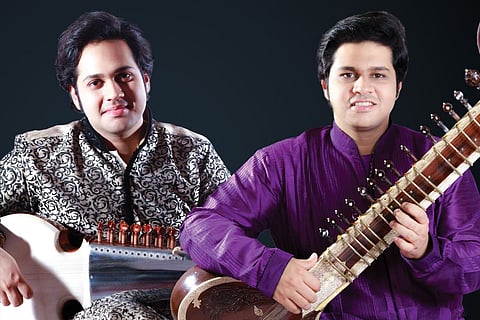
The acclaimed Mohan Brothers, Lakshay Mohan (sitar) and Aayush Mohan (sarod), are all set to return with the much-anticipated second edition of Monsoon Ragas. With this concert, they are all set to take listeners into a world of melodic rains and rhythmic thunder, capturing the essence of the monsoon through the timeless beauty of Indian classical music. Through their signature jugalbandi, the performance promises an immersive journey of evocative ragas and spontaneous interplay, celebrating the magic of the season.
Monsoon Ragas is a musical dialogue between sitar and sarod that holds a deeply personal place in the hearts of the artistes. As they put it, “The season of rains has a special place in Indian classical music. There are ragas that capture the romance, joy, and nostalgia of the monsoon. When sitar and sarod come together, the textures are like two streams merging into one river. While sometimes they are playful, at other times, they are meditative. It’s not just a performance; it’s a conversation in melody.”
Quiz them about their upcoming performance in Delhi, and they say, “Delhi is home for us, so there’s always an extra spark. The audience can expect soulful ragas inspired by the monsoon season, intricate jugalbandi exchanges, and moments of complete improvisation where even we don’t know what’s coming next. That’s the beauty of live music; it’s created in the moment.”
The duo recently performed Strings of Solstice, in London, and they recall the experience with warmth. “It was magical. Playing at Duke’s Hall, Royal Academy of Music was an honour. The acoustics, the ambience, and the warmth of the audience made it special. We were touched to see how deeply an international audience connected with our ragas, even without knowing the grammar of the music. Music truly speaks beyond language.”
The Mohan Brothers are known for their unique jugalbandi style. Prod how they developed the same and the duo say it was organic. “We grew up as brothers sharing not just a home but a musical upbringing. There was no ‘plan’ to create a style. It just evolved naturally from years of listening to each other, finishing each other’s musical sentences, and sometimes teasing each other musically on stage! Over time, that instinctive understanding became our signature.”
Interestingly, they never intended to become professional musicians. “That’s true. As kids, music was a part of life but not a ‘career plan.’ We were more focused on studies, and playing was something we just loved doing without thinking about the future.” But things shifted with time, thanks to the encouragement of mentors and listeners. “The turning point was the encouragement we received from our gurus and the audiences. Every time we performed, people would tell us how deeply the music touched them. That kind of impact makes you realise that this isn’t just a hobby but a calling.”
Their inspirations come from the greats of Indian classical music. “Our gurus taught us not just the technique but the soul of music. Legends like Pandit Ravi Shankar, Ustad Ali Akbar Khan, and Pandit Nikhil Banerjee have shaped our vision.”
Ask them about their creative process, they share that everything begins with the raga. “It often starts with a raga and we explore its mood, its colours. Then, we try to find points of dialogue between sitar and sarod, places where we can blend, contrast, or challenge each other. Sometimes ideas come during practice; sometimes, magic happens spontaneously on stage.”
And what are the challenges faced by classical musicians today? “Attention span! In today’s fast-paced world, where people consume content in seconds, getting them to sit with a raga for an hour can be a challenge. But we believe if the presentation is honest and immersive, audiences will stay.”
They are also deeply invested in the future of classical music. “It starts with exposure. Children should hear live concerts, interact with musicians, and experience the beauty of this art form early on. At the same time, we have to adapt using digital platforms creatively without compromising the depth of the music.”
On their upcoming projects, the duo say, “After Monsoon Ragas, we have concerts lined up across India and a few international tours.” And when asked about dream collaborations, they are open-minded yet rooted: “We’d love to work with great artistes across genres, from Indian classical maestros to world music legends, as long as the collaboration is rooted in mutual respect and musical honesty.”
On August 21, Kamani Auditorium, New Delhi
For more updates, join/follow our
https://www.whatsapp.com/channel/0029Vb677uz60eBXiDYheb0n