
- LIFESTYLE
- FASHION
- FOOD
- ENTERTAINMENT
- EVENTS
- CULTURE
- VIDEOS
- WEB STORIES
- GALLERIES
- GADGETS
- CAR & BIKE
- SOCIETY
- TRAVEL
- NORTH EAST
- INDULGE CONNECT

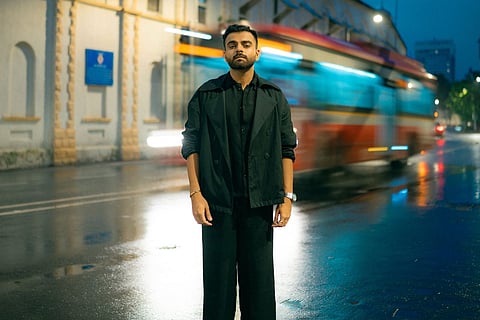
Dhaval Kothari, the voice behind the viral #Folktales series, is back. After clocking 18 million+ views across reimagined folk classics, he unveils his new single Jaagi Jaagi. We asked him what this next “awakening” means.
“Over the years, my personal music space has evolved immensely. Jaagi Jaagi was born from this phase of growth where I’m exploring global sounds like R&B and UK Garage while staying rooted in who I am as a Gujarati musician. For me, awakening is about recognising how far I’ve come, from Saaje Saaje to this track and how much my sound, sensibilities, and musicality have matured. It’s a personal reminder that evolution doesn’t mean losing your essence, rather it means expanding it.
Taking us through creative process behind the song, “The song actually began with a casual jam session where Bharat and I were sitting together one day, playing around with UK Garage beats, and the emotion of longing naturally emerged as a theme. What made Jaagi Jaagi special is that it’s told from a female perspective, it is an intimate, delicate expression of yearning and emotional restlessness. As we shaped the lyrics, we focused on capturing that vulnerability in a way that felt honest and immersive. That emotional core really guided the entire process.”
The song blends classical, folk, and modern influences. What specific musical or cultural elements shaped Jaagi Jaagi? “I grew up speaking mostly Hindi, but being from a Gujarati household, the language was always a part of me even if I wasn’t confident writing it. I’m grateful to Munaf, who helped me fine-tune the Gujarati writing and bring linguistic authenticity to this song. Sonically, I wanted to push boundaries. The soundscape is forward-leaning and extremely global. If Punjabi or other regional languages can break into global charts, why not Gujarati? Jaagi Jaagi is my attempt to place Gujarati music in that same progressive global space.
What was the most challenging aspect of producing this single? “For me, the challenge is always the same, which is staying rooted. Whether it’s Indian classical influences or subtle folk elements, I want every composition to reflect where I come from. Blending these roots with R&B and UK Garage, without letting one overshadow the other, required a lot of thought and balance.”
How do you approach balancing experimentation with staying true to your musical roots in a track like this? What are some misconceptions about regional or folk music that you hope your work challenges? “There’s a common misconception that Gujarati or regional music is only Garba. Across generations, from my grandparents to my parents and now to me, we’ve heard the same melodies repeated in folk structures. My challenge and responsibility is to bring freshness to Gujarati literature and music while still honouring the cultural identity. That takes understanding your craft, understanding your audience, and building your own niche with intention. I’ve spent time educating myself on both and that’s what allows me to experiment without losing my essence.”
With independent music gaining global traction, what role do you feel Gujarati or folk music can play on the global stage? “The potential is huge. Gujarati music has a massive untapped audience which is nearly 60 million speakers worldwide and a diaspora spread across 120+ countries. Just look at Navratri, for these 9–10 days, thousands gather every night almost like concert festivals. That’s the scale we’re sitting on. With this built-in global base, fresh modern Gujarati music has the potential to break out far beyond festive tracks and create a true global wave.
If this audience both in India and abroad is introduced to this new-age Gujarati music beyond just festive songs, we can build a global movement. Regional music has numbers, cultural identity, and emotional connect. It just needs the right sound and storytelling to break through internationally.”
For more updates, join/follow our
https://www.whatsapp.com/channel/0029Vb677uz60eBXiDYheb0n