
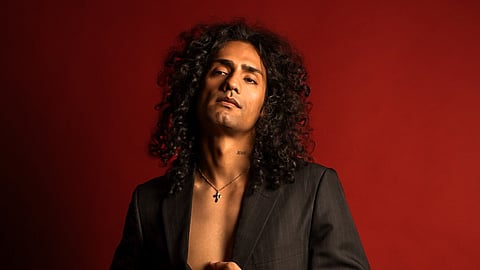
Naalayak explores healing and growth on new album Marammat

Naalayak, better known as Sahil Samuel, has steadily carved a space for himself in India’s indie pop-rock scene through emotionally raw, crowd-moving anthems like Zakir, Baawra and Sunday. Known for pairing powerful rock energy with deeply personal storytelling, Naalayak’s music has always resonated with listeners who find comfort in honesty. His latest album, Marammat — marks the most defining chapter of his journey yet. Born out of a period of profound self-doubt and personal upheaval, the album is not just a collection of songs but a complete narrative of healing and intentional growth. Blending Hindi-Urdu poetry with unfiltered emotion, Marammat traces the full spectrum of recovery — embracing vulnerability, silence, resilience and the quiet courage it takes to begin again.
Marammat means 'repair' in English. What kind of repair were you seeking when you began writing this album?
I think the thing that needed the most repair was my belief in myself. Somewhere along the way, I had started doubting my own voice — both as a person and as an artiste. Marammat began when I realised that healing isn’t about returning to what once was; it’s about finding the courage to start again and trusting yourself through the process.
Was there a moment or phase in your life that led to the idea of Marammat?
There was a time when everything around me felt uncertain. I was questioning my purpose, my music and even the people I trusted. Yet, in that stillness, music stayed with me. I didn’t sit down with the intention of making Marammat — it slowly took shape while I was trying to make sense of everything. It wasn’t planned; it happened naturally, as if my emotions found a rhythm before I did.
You’ve called this your most important work. Why does it feel so special to you?
Marammat came from a place of complete surrender. It wasn’t about chasing success or proving anything — it was about facing myself. Every song demanded a level of honesty I hadn’t allowed before. There were days filled with silence, doubt and unanswered questions. What makes it special is that it didn’t save me in one grand moment; it did so slowly and quietly, through every song I wrote. It reminded me that strength isn’t about fighting the storm, but about learning to stand still within it and trusting that it will pass.
How long did it take for Marammat to come together, from the first idea to the final songs?
It’s hard to measure Marammat in terms of time because it didn’t unfold like a project — it unfolded like a process. The first conscious thought came around last November, but looking back, I realise the journey started much earlier, in moments I didn’t recognise as beginnings. Some songs came together in one sitting, while others took months of silence before a single line appeared. There were days I couldn’t write at all and days when everything poured out at once. So I’d say Marammat took exactly as long as it needed — just as long as I needed — to find clarity in both the sound I was creating and the person I was becoming.
Your songs mix strong rock sounds with honest emotions. How do you maintain that balance?
I think both come from the same place — emotion. Some feelings are loud, some are quiet, but all of them are real. Rock gives me the space to let those emotions exist as they are, without trying to fix or shape them. I don’t plan the sound; I follow what feels honest in that moment. When you stop fighting what you feel, the noise and the silence begin to make sense together.
You often write in Hindi and Urdu. What makes those languages special for your songs?
It’s the emotion they carry. Hindi feels grounded; it connects me to where I come from. Urdu feels like emotion itself — gentle, poetic and deep. I’ve been drawn to that combination since I was a child. Growing up listening to artistes like Atif Aslam and Ali Zafar made me realise how deeply language can hold feeling. For me, Hindi brings honesty and Urdu brings soul. Together, they allow me to express what I truly feel.
What did you learn about yourself while working on this album?
I learnt that healing isn’t a straight road — it’s messy, uncertain and sometimes lonely, but it always moves forward. While working on Marammat, I realised that vulnerability isn’t weakness; it’s what makes you real. There were days when I felt completely empty and yet those were often the days when something honest found its way into my music. I learnt to sit with silence, to trust the pause and to find strength in simply showing up, even when I didn’t feel whole.
What’s next for you?
For now, I want to see how Marammat finds its place in people’s hearts and what it stirs within them — that’s the real reward. I’m also looking forward to taking it on tour and experiencing that energy come alive in front of me. There’s something truly special about hearing people sing your words back to you; it makes everything worth it. Beyond that, I’m not rushing to define what comes next. I want to keep creating, keep exploring, and let the music take me wherever it’s meant to.
Marammat is streaming on all audio platforms.
Email: alwin@newindianexpress.com
X: @al_ben_so