
- LIFESTYLE
- FASHION
- FOOD
- ENTERTAINMENT
- EVENTS
- CULTURE
- VIDEOS
- WEB STORIES
- SPORTS
- GADGETS
- CAR & BIKE
- TRAVEL
- SOCIETY
- GALLERIES
- NORTH EAST
- INDULGE CONNECT

For decades, our city has quietly nurtured an eclectic but deeply committed community of classical musicians — artistes who straddle carnatic, hindustani, folk traditions and increasingly, contemporary crossovers.
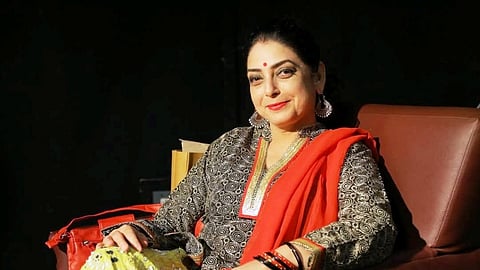
To understand how the city’s soundscape has evolved for our Past Forward anniversary special, we spoke with Sangeetha Srikishen, senior carnatic vocalist, whose artistic journey mirrors Bengaluru’s own transformation: a singer who began life in Chikkamagaluru, trained across Bengaluru, Mysuru and Chennai and has since become one of the city’s most versatile performers. Her entry into the Bengaluru music scene was almost serendipitous.
“It really began with my college music club at MES,” she recalls. She had already been singing since she was six, but Bengaluru was where her practice found direction. What followed was a rigorous academic and artistic path — postgraduate studies in music at Mysuru University and several years of advanced training under leading gurus in Chennai and Bengaluru.
Returning to Bengaluru in the late ’90s, she stepped into a city on the cusp of change. IT was booming, audiences were diversifying and classical music was beginning to find new formats and new stages. Since then, she has performed extensively, recorded widely and explored genres that extend beyond the traditional carnatic repertoire — folk forms, film music, fusion and particularly a style she calls bhakti fusion, which has become one of her artistic signatures.
“Carnatic is my core,” she tells us, “but I enjoy travelling across genres. Bengaluru allows that kind of freedom.” Over the past few years, she has also become a familiar face on television, having hosted and produced several music-based programmes. But this shift, too, stemmed from an unexpected intersection of art and social work. Alongside her musical career, she runs a small NGO — Smile Charitable Trust — which works in rural sanitation and has constructed over 300 toilets across 15 schools. Television, she explains, became one avenue for raising awareness and funds.
Invited initially to perform on Shankara TV and Ayush TV, she found herself gradually moving into curation and production. “They asked whether I’d be able to come up with a reality show — and that’s how it began,” she explains. She went on to create two seasons of Sangeet Yatra, a carnatic classical reality series, as well as Chant India, a show focused on film music. These experiences widened her view of the city’s musical appetite: “Audiences are far more open now. Multi-genre shows always run full.”
Yet, beneath Bengaluru’s reputation for openness lies a more complicated reality. While the city is celebrated for its cosmopolitanism and willingness to embrace experimentation, opportunities within the classical circuit can still feel uneven. “It’s tricky to talk about,” she admits. “There are some people who get continuous opportunities and others who don’t — despite years of training.” Having performed since childhood and now a senior figure in the carnatic fraternity, she still finds that pure classical concerts come her way less frequently than expected. Instead, she’s often invited for bhakti fusion, film-based performances or collaborative folk shows. “I’m not the best marketing person,” she adds with a laugh, “and in this field, that matters more than people realise.”
And yet, compared to other classical strongholds, Bengaluru remains refreshingly fluid. The rigidity often associated with Chennai’s carnatic ecosystem — where artistes are expected to adhere strictly to tradition and where branching out into film or fusion can invite criticism — is far less pronounced here. “Absolutely, Bengaluru gives you that freedom,” she says. “The audience accepts everything — from classical to sufi to folk — in the same concert. They enjoy the variety and I enjoy performing that way.”
Looking ahead, she hopes Bengaluru’s classical landscape will evolve in one essential way: by giving its own artistes more space. “First, encourage local musicians. Secondly, avoid bias. Don’t deny a stage to someone you’ve never listened to. A handful of names get circulated again and again and that needs to change,” she avers. To her, the remedy is simple: better recognition, wider platforms and an organiser community willing to diversify its choices. As Bengaluru continues to expand — culturally, creatively, demographically — its music scene stands at an intriguing crossroads. It remains a city that embraces hybridity, honours tradition and welcomes the new. And as artistes like Sangeetha navigate its shifting rhythms, Bengaluru’s many raagas continue to evolve, blending old worlds with new sounds in ways only this city can.
Email: romal@newindianexpress.com
X: @elromal