
- LIFESTYLE
- FASHION
- FOOD
- ENTERTAINMENT
- EVENTS
- CULTURE
- VIDEOS
- WEB STORIES
- SPORTS
- GADGETS
- CAR & BIKE
- TRAVEL
- SOCIETY
- GALLERIES
- NORTH EAST
- INDULGE CONNECT

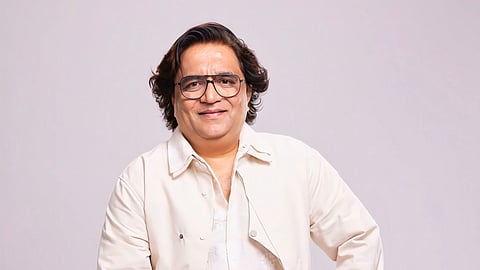
According to most, Swanand Kirkire’s words have always belonged to unforgettable film moments. From crafting lyrics that have become part of popular culture to winning three National Awards as a lyricist, writer, singer and actor, storytelling has remained at the heart of everything he creates. But his latest musical chapter is a deeply personal one. This time, the songs aren’t tied to a screenplay, a character or a cinematic moment — they simply exist on their own.
“Some of them are already out and some are coming,” says Swanand of his ongoing series of six independent songs. “These are songs for the songs’ sake. This is my poetry, my music.” Unlike film tracks that serve a narrative, these compositions stand independently. Drawing a parallel with Western singer-songwriters, he explains, “If you listen to a Taylor Swift song, it’s just a song. Nothing else. That’s what I’m trying to do.” Having written and composed numerous personal pieces over the years, he felt it was finally time to share them. Songs like Meri Jaan and Chaand Awara have already been released, with more on the way. “It’s one more facet of life which I have opened,” he says. “I want to release them as they come.”
Despite decades in the industry, Swanand believes the essence of his creative process has remained largely unchanged. What has evolved instead is the weight of responsibility that comes with experience. “Earlier I was a new lyricist, so I made mistakes and people accepted them,” he says. “Now people take me seriously. One has to be very careful and responsible. I don’t mean every song should be moralistic, but it should communicate something meaningful.”
That emotional sincerity, which has become synonymous with his writing, doesn’t come from one source alone. “A good song is a combination of everything,” he says. “Personal experiences are there, but imagination is a big part too.”
He believes writers constantly absorb the world through books, films and observation. “I’ve never been to Japan, for instance, but I know so much about it because I’ve read their books and watched their films. You don’t have to experience everything yourself to write about it.”
As music consumption shifts towards shorter attention spans and social media trends, Swanand doesn’t see adaptation as compromise. “You have to cater to the consumption medium,” he says matter-of-factly. “When I started writing, songs had three or four antaras and lasted five or six minutes. Now a song is two or two-and-a-half minutes because people’s attention spans have changed.” For him, understanding how audiences consume music is simply part of evolving with the times.
For an artiste who has collaborated with some of Indian cinema’s biggest filmmakers and composers, creative freedom remains non-negotiable. He recalls being asked to write “like Gulzar,” an expectation he gently rejects. “Gulzar saab is Gulzar saab. How can I write like him?” he asks. “The best work happens when the director allows me to be myself and I allow the director to be themselves. Creativity should take over more than commercialism.”
Looking back on a career filled with accolades, Swanand has little room for regret. “I’m really, really grateful for what I’ve got. No complaints,” he says. While every listener has a different favourite, he admits there is one project he wishes had found a wider audience. “Bandwaale could have done a lot better. Everyone who has watched it has loved it, and my heart and soul is with that work.”
His advice to aspiring lyricists is as uncomplicated as it is profound. “Be yourself,” he says. “If people want someone else, they’ll go to someone else. They won’t come to you.” In an age of algorithms and endless imitation, he believes originality remains irreplaceable. “Nothing about you can be replicated. Our fingerprints are different, our pupils are different, so our voices and experiences should be different too.”
Email: isha.p@newindianexpress.com
X: @indulgexpress
For more updates, join/follow our WhatsApp, Telegram and YouTube channels.