
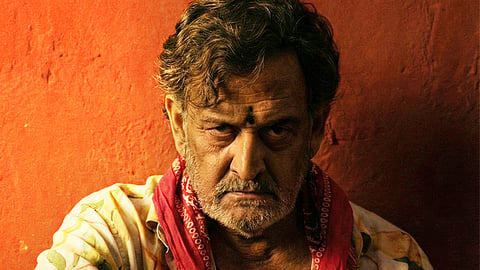
Mahesh Manjrekar on Animal: “Theatre Strips You — Stardom Fulfils Ambition, Not the Soul”

In a conversation with Indulge Express, producer Ashvin Gidwani frames Animal within an era of hyper-visibility, ambition, and private isolation.
“What made Animal feel urgent was not just the story itself, but the moment we are collectively living through. We are in an era defined by relentless ambition, where success is publicly celebrated yet privately isolating. Animal speaks directly to that tension, " said Ashvin.
“This is a story that belongs to everyone…” — The Mumbai Dream
He sees it as the story of every dreamer who arrives in Mumbai with hope as both burden and fuel.
“This is a story that belongs to everyone who arrives in Mumbai with a single bag — heavy not with possessions, but with dreams. It carries ambition sharpened by pride and a quiet, unwavering belief in oneself. Mumbai welcomes such dreamers without ceremony and without pause, revealing itself not as a city that never sleeps, but as one that does not allow you to. Its pulse is relentless; its momentum unforgiving. The city runs on an energy so vast and consuming that even the most boundless personal drive can momentarily feel inadequate.”
“Then begins the true encounter…” — The Emotional Cost
What follows is a reckoning familiar to anyone who has pursued ambition in the city.
“Then begins the true encounter — with what this energy takes and what it awakens. Joy collides with disappointment; hope wrestles anxiety. Stress tests endurance, pain sharpens perspective, and fleeting triumphs keep the heart racing. Dreams are questioned, reshaped, sometimes broken — yet they persist. This is not one person’s journey but a collective one, where we recognise fragments of who we were, who we are, and who we may become — a mirror to ambition and resilience.”
“Mumbai is never a one-sided exchange…” — What the City Returns
Yet, he insists, the city is not merely extractive.
“And yet, Mumbai is never a one-sided exchange. The city that takes so much has an extraordinary way of giving back — often more than one dares to imagine. It returns strength where there was doubt, clarity where there was chaos, and possibility where there was fear. For those who endure, the city does not merely shape dreams; it expands them, transforming belief into becoming.”
“Bringing this story to the stage now felt necessary…” — Why Theatre
For Gidwani, theatre is the space to confront these tensions together.
“Bringing this story to the stage now felt necessary because theatre offers something rare: a shared space to pause, reflect, and confront uncomfortable truths together. In a world accelerated by technology and metrics, Animal asks deeply human questions: What are we becoming? What are we losing? And at what point does ambition stop serving us and start consuming us?”
“Human beings are inherently social…” — Live Performance in an AI Age
The conversation turns to theatre’s relevance in a screen-led world.
“Human beings are inherently social. However advanced technology becomes, the desire for genuine, shared experiences outweighs passive engagement through a screen.
In the post-COVID world, audiences have gravitated toward live entertainment for presence, connection, and emotional resonance — qualities digital mediums cannot replicate.
As we move deeper into the age of AI, the hunger for real, human-led experiences intensifies. Audiences do not simply want to watch; they want to feel. The mandate is clear: create original, immersive moments where artists and audiences share the same space, energy, and breath.”
That conversation was followed by a more personal, introspective exchange with Mahesh Manjrekar — who not only directs Animal but inhabits its solitary protagonist, Dattu, on stage. Where Gidwani speaks of vision and context, Manjrekar speaks of embodiment, vulnerability, and reckoning — themes that unfold in the conversation that follows.
In Animal, Dattu arrives in Mumbai chasing stardom, only to find the city slowly turning predatory. When you inhabit him on stage, do you recognise echoes of your own early artistic journey — of ambition, vulnerability, or the cost of wanting too much?
Every artist who arrives in Mumbai carries a private myth about destiny. Dattu carries his. I carried mine.
When I step into his skin, I recognise that dangerous mix of ambition and innocence… the belief that talent alone is enough. The city teaches you otherwise. It tests your patience, your ego, your hunger.
I wouldn’t call it autobiography, but I understand the emotional cost of wanting something too badly — the vulnerability, the compromises you refuse to make, and the ones you almost do. That echo is very real.
You have lived many lives in cinema — as an actor, a director, a storyteller shaping other people’s dreams. On stage, especially in a near-solitary performance like Animal, who has more control: the performer or the character?
Initially, the performer believes he is in control. He understands rhythm, pauses, craft.
But if the performance is honest, there comes a point where the character begins to lead. Dattu’s rhythm takes over. His desperation dictates the pauses. His silences decide the weight of a scene.
The real art lies in surrender… controlled surrender. You guide the character, but you allow him to breathe independently. That tension is what keeps theatre alive.
Despite success, visibility, and reach in cinema — and even television — you have consistently returned to theatre. What does the stage demand from you that cinema and TV simply do not?
Cinema magnifies you. Television repeats you. Theatre strips you.
On stage, there is no second take. No edit. No background music to rescue a weak moment. The audience breathes with you — or they don’t.
Theatre demands presence. Absolute presence. It demands discipline and emotional nakedness. That immediacy is addictive. It reminds you why you began acting in the first place.
Dattu speaks to invisible audiences, blurring confession and performance. As someone who has witnessed fame closely, do you feel stardom isolates artists more than it fulfils them?
Stardom amplifies everything — applause and loneliness.
When people see an image, they stop seeing the person. Expectations grow. Access reduces. You become visible yet strangely unreachable.
Dattu speaks to invisible audiences because that is what performers often do. Even at the height of success, you are searching for someone who is truly listening. Stardom fulfils ambition. It does not automatically fulfil the soul.
At this point in your career, what does theatre represent for you — discipline, risk, honesty, or something closer to personal reckoning?
At this stage, theatre is reckoning. It is where you measure yourself without filters. It is risk because the audience is unforgiving. It is discipline because the stage respects no shortcuts.
But above all, it is honesty. Theatre reminds you that before the fame, before the camera, before the applause, there was simply a man and a story. And that is still enough.