
- LIFESTYLE
- FASHION
- FOOD
- ENTERTAINMENT
- EVENTS
- CULTURE
- VIDEOS
- WEB STORIES
- SPORTS
- GADGETS
- CAR & BIKE
- TRAVEL
- SOCIETY
- GALLERIES
- NORTH EAST
- INDULGE CONNECT
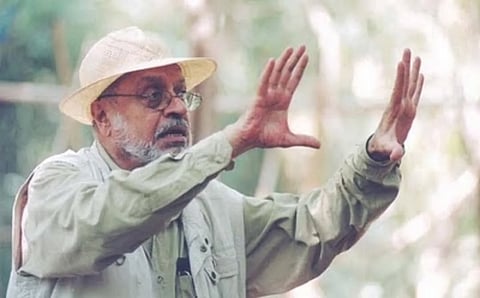
Renowned Indian filmmaker Shyam Benegal, a titan of Indian cinema, passed away yesterday, leaving behind an indelible legacy that transformed the landscape of filmmaking in the country. Known as the pioneer of Indian parallel cinema, Benegal’s work was characterized by its commitment to authenticity, social realism, and nuanced storytelling.
Born on December 14, 1934, in Hyderabad, Benegal embarked on his cinematic journey with the groundbreaking film Ankur (1974). The film, rooted in rural India, delved into themes of feudalism, caste, and gender dynamics, setting the tone for his career as a filmmaker who brought marginalized voices to the forefront. Ankur not only won critical acclaim but also marked the emergence of talents like Shabana Azmi, who became a key figure in Indian parallel cinema.
Benegal’s body of work, including films like Nishant (1975), Manthan (1976), and Bhumika (1977), tackled issues of social injustice, women's empowerment, and rural development with a depth rarely seen in mainstream cinema. His films often blurred the lines between art and activism, urging audiences to reflect on the socio-political realities of India.
One of Benegal’s unique contributions was his collaborative approach to filmmaking. He worked closely with writers like Girish Karnad and Satyadev Dubey, as well as a repertory of actors including Smita Patil, Om Puri, Naseeruddin Shah, and Kulbhushan Kharbanda, whose careers he helped shape. His ability to elicit powerful performances and craft compelling narratives cemented his reputation as a master storyteller.
Beyond feature films, Benegal was a pioneer in television. His historical series Bharat Ek Khoj (1988), based on Jawaharlal Nehru’s The Discovery of India, is considered a landmark in Indian television. Through its episodic exploration of India’s cultural and historical heritage, Benegal brought history to life for a generation of viewers.
Benegal’s accolades include numerous National Film Awards, the Padma Shri (1976), and the Padma Bhushan (1991). Despite his critical success, he maintained a deep humility, often emphasizing the collective effort behind his works.
As India mourns the loss of Shyam Benegal, his legacy as a filmmaker who married artistry with purpose remains a beacon for storytellers. His films continue to inspire, reminding us of the power of cinema to reflect and reshape society. His passing marks the end of an era, but his work will endure, standing as a testament to his unparalleled contributions to Indian cinema.
