
- LIFESTYLE
- FASHION
- FOOD
- ENTERTAINMENT
- EVENTS
- CULTURE
- VIDEOS
- WEB STORIES
- SPORTS
- GADGETS
- CAR & BIKE
- TRAVEL
- SOCIETY
- GALLERIES
- NORTH EAST
- INDULGE CONNECT

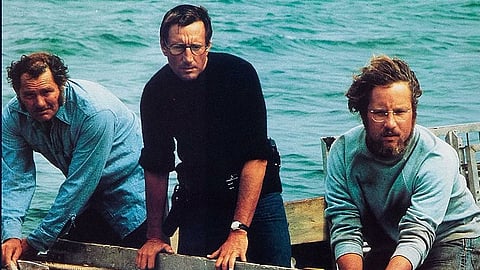
Half a century after Jaws first terrified beachgoers and turned cinema on its head, Steven Spielberg’s Great White thriller remains as sharp as ever. Released on 20 June 1975, Jaws didn't just break box office records—it birthed a cultural phenomenon, launched the modern blockbuster, and redefined what summer at the movies could mean.
At the time, Universal’s wide-release strategy was bold and virtually unheard of, rolling out the film in 409 theatres with an unprecedented marketing push. The gamble paid off. In its opening weekend alone, Jaws grossed $7.9 million—an astronomical figure for the era—and went on to rake in $260 million in the US. Adjusted for inflation, that’s about $1.5 billion today.
But for all its commercial impact, Jaws is far more than a money-maker. It’s a masterclass in suspense, storytelling, and how to stretch every dollar of production into something unforgettable. Steven’s decision to shoot on location in Martha’s Vineyard, rather than rely on studio sets or trickery, gave the film a distinct sense of place. The windswept coastlines, tight-knit island community, and small-town charm ground the terror in something real—something tangible. And then there’s the shark—or rather, the lack of it. Malfunctions with the mechanical beast (affectionately dubbed “Bruce”) forced Steven to hide the predator for much of the film. What could’ve been a production disaster turned into creative gold. The result was a film that leaned into Hitchcockian suspense, letting fear simmer through ominous waters and John Williams’ unforgettable two-note score. The monster didn’t need to be seen to scare; it only had to be felt.
Ironically, this restraint is exactly what many modern blockbusters miss. Hollywood has spent decades chasing Jaws’ legacy with bigger boats, louder CGI, and endless franchise spin-offs—missing the core lesson: less is more. It wasn’t scale that made Jaws legendary; it was craft. To mark the milestone, a wave of tributes has followed: National Geographic’s Jaws @ 50: The Definitive Inside Story premieres on 10 July, featuring Steven himself. Martha’s Vineyard is hosting themed events, and NBC will air the film in primetime with a special introduction. So yes, Jaws invented the blockbuster. But more importantly, it did so with heart, innovation and sheer filmmaking nerve—something today’s spectacle-saturated industry would do well to remember.
For more updates, join/follow our WhatsApp, Telegram and YouTube channels.