
- LIFESTYLE
- FASHION
- FOOD
- ENTERTAINMENT
- EVENTS
- CULTURE
- VIDEOS
- WEB STORIES
- SPORTS
- GADGETS
- CAR & BIKE
- TRAVEL
- SOCIETY
- GALLERIES
- NORTH EAST
- INDULGE CONNECT

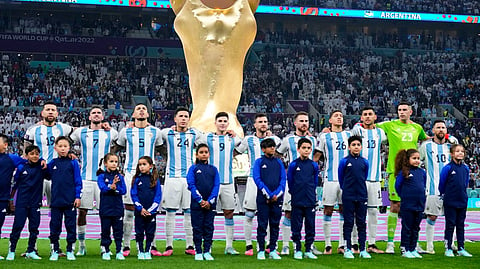
If you have watched a football match, you have probably noticed, that when players walk out on the pitch, little children accompany them, holding their hands. These children, known as 'player escorts' or 'mascot children' have been a part of footballing tradition for more than two decades.
When little kids walk out with professional footballers onto the field, it leads to several heartwarming moments. From starstruck kids to children who are smart enough to strike a pose at the camera, this is one of football's most favourite rituals.
According to reports, one of the first times children were captured in photographs as mascots was back in November 1996 when a match between Liverpool and Everton was played. In the early 2000s, this became a ritual according to which each player must walk out with a child, generally aged between 6 to 10.
This practice initially stemmed from the need to spread awareness about various causes related to children. For instance, FIFA and UNICEF had collaborated before the FIFA World Cup 2002 on an initiative called Say Yes For Children. It aimed at promoting children's right to basic education and recreation.
Eventually, other organisations such as McDonald's and Commonwealth Bank, came forward to promote different causes. The FIFA World Cup decided to carry on the ritual since the 2002 edition.
For the 2026 World Cup, hosted jointly by Mexico, Canada and USA, Quaker Oats has been leading the player escort programme. The organisation, along with Common Goal, has planned to bring more than 1,400 children to the tournament across 11 host cities in the United States.
In a press release, Tina Mahal, the senior VP of Marketing at Quaker Foods, said, "At a moment when millions of fans are inspired and energised, we wanted to be part of a bigger conversation—providing resources around daily nutrition for families and communities and inspiring the next generation with moments both on and off the field."
Previously, it has been also found that certain clubs in the English Premiere League have been charging a large sum of money for children to become player mascots.
However, it is important to remember, that this beloved football ritual was started to encourage more youth engagement in the sport and raise awareness for important issues. In many cases, it also acts as a way to curb crowd violence because people are less like to throw items from the stands if children are on the pitch.
For more updates, join/follow our WhatsApp, Telegram and YouTube channels.