
- LIFESTYLE
- FASHION
- FOOD
- ENTERTAINMENT
- EVENTS
- CULTURE
- VIDEOS
- WEB STORIES
- SPORTS
- GADGETS
- CAR & BIKE
- TRAVEL
- SOCIETY
- GALLERIES
- NORTH EAST
- INDULGE CONNECT
As the barges floated down the Seine at the opening ceremony of this riparian extravaganza to celebrate the start of the Paris 2024 Olympics, India fully expected to see at the very least the grand finale of the Ambani wedding complete with Nita Ambani in full Mahabharata couture and Mughal jewellery, holding our flag aloft, and every athlete turned out as gorgeously as our Bollywood starlets at the many dazzling balls that India overdosed on last month. We almost expected Kim Kardashian to be bringing up the rear in something dangerously low-cut!
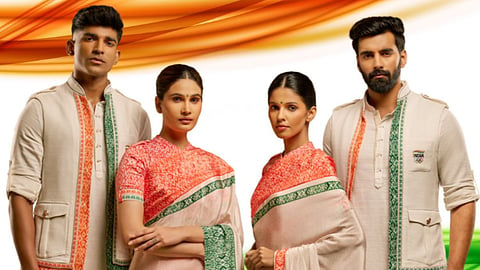
What they saw seemed to disappoint them. “Arre yaar, what is this sari-wari and kurta-pyjama,” cried the newly-minted fashion critics – forgetting entirely that this is the look of the real India; an ever beautiful and timeless sari worn in the Mysore ulta palla style, with the men dressed much like many men in India do, in the supremely comfortable kurta-pyajama and bundi which is as close to perfection as one can sartorially get. The athletes looked relaxed and radiated positivity as our flag fluttered in the Parisienne breeze. The sudden downpour could not dampen their spirits, and they quickly dried in the lightweight natural viscose fabric, a sensible choice given that the Mongolian team was wearing a heavy fabric, maybe wool which can get very soggy and heavy when wet, taking forever to dry.
There’s a back story to this. The Sports Ministry commissioned this project to Tasva, the menswear brand helmed by the supremely-talented Tarun Tahiliani. He belongs to India’s fashion royalty, from the very first generation of designers who followed everyone’s favourite OG Ritu Kumar. He was the first serious designer to open a luxury store – the iconic Ensemble in Mumbai– which created a new narrative for luxury retail in this country. The project was only commissioned last year by the previous minister and dragged on and hit a full stop when the elections were announced. By the time it resumed, it was just a few months before the deadline, and design plans had been changed. Tahiliani finally got them to sign off on the final look and the ceremonial costumes went into production.
Here is what Tahiliani had to say about the brief. “Tasva’s ceremonial dress for Team India at the Paris Olympics is an ode to the young and dynamic avatar of our nation. It is not a fashion statement but rather it honours our athletes and the spirit of the event. The vision was clear – keep the focus on the athletes, while adding a touch of minimalist detailing fit for the occasion. The uniforms draw inspiration from our national tricolour flag, as many countries proudly wear their flag’s colours.
The bundi jacket is a symbol of Indian sartorial elegance. It features sporty safari pockets and epaulettes. Inspired by our Armed Forces, these details also symbolise a unified rank for athletes across different sports. For women, the sari stands as the true Indian silhouette. The digital ikat print in tricolour has been thoughtfully chosen to complement the riverside setting from dusk to sunset. The ikat inspiration represents a rich cultural tradition across India. The choice of print over handloom is to ensure consistency across all uniforms and materials (bundi, blouse, and sari). The base ivory shade reflects inclusivity, embracing every skin tone with grace and subtlety. This universal colour symbolises unity and diversity. The sneakers incorporate brocade fabric, celebrating the Indian textile tradition of Benares.
Keeping in mind the Paris summers, the uniforms are crafted from premium cotton and viscose blends. The materials ensure lightweight comfort and breathability while also being perfect for draping with minimal maintenance. The saris are also pre-pleated keeping in mind our athletes’ convenience. This year’s uniform isn’t about being loud. There was a conscious decision not to go overboard with heavy embroidery and embellishments. It’s about understated sophistication, paying tribute to our national flag as the athletes proudly represent the nation on the global stage.”
A lot of the criticism stemmed from the fact that the fabrics did not reflect the handloom heritage of India. But viscose is a natural fibre, lightweight and comfortable. The minimalist and basic idea did not resonate with critics of the look, who felt that India had more to offer in terms of pageantry and drama. This is not a platform for the craftspeople of India – who it may interest you to know are doing very well indeed with business booming, in the words of many fashion and craft experts that I spoke to.
We seem to be heading towards a sartorial standard that equates maximalism with the idea of India. Wretched excess be damned! Bring on the bling and turn every look into a triumphant bridal moment, glittering with precious stones and inspired by any passing fancy. From the high society weddings to the FDCI couture fashion shows currently being held in New Delhi, the emphasis is on the royal, the resplendent and the rare. Even here our craftspeople shine, with designers like Suneet Varma offering hand-crafted ensembles that are stunning and intricate in their details.
The athletes were not on their way to a wedding, and the salute to the most beautiful of our costumes with no added embellishments allowed the personalities of our athletes to shine through. This was the ultimate aim, and I think it was achieved extremely well!
(Written by Prasad Bidapa)
