
- LIFESTYLE
- FASHION
- FOOD
- ENTERTAINMENT
- EVENTS
- CULTURE
- VIDEOS
- WEB STORIES
- SPORTS
- GADGETS
- CAR & BIKE
- TRAVEL
- SOCIETY
- GALLERIES
- NORTH EAST
- INDULGE CONNECT

Right from preparing regular homely meals to organising grand feasts for family gatherings, the sight of our mothers toiling away in the kitchen is familiar in a typical Indian set-up. This age-old practice, while deeply ingrained, often leads to women being taken for granted in the culinary realm. However, many of them today recognise the value of their culinary skills, talents, and love for food, and embrace them wholeheartedly. After all, the ability to transform simple ingredients into delectable dishes is a remarkable talent. Beyond the confines of their homes, these women are also sharing their culinary creations with a wider audience.
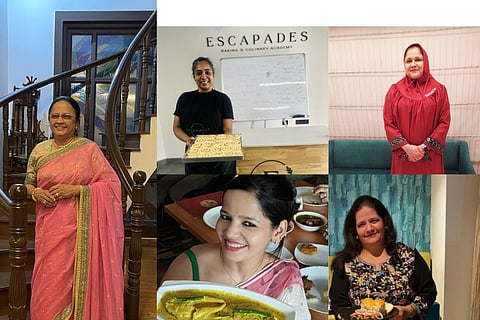
In Hyderabad, a bustling hub of gastronomic delights, numerous home chefs and entrepreneurs are making waves with their diverse cuisines and innovative flavours. They are not just cooking; they are crafting culinary experiences that are as visually stunning as they are delicious. Through their dedication and passion, these women are challenging traditional gender roles and proving that the kitchen is a space for creativity, innovation, and empowerment. On the occasion of International Women’s Day, we interact with five wonderful women in Hyderabad who are ruling the hearts of people with their unique culinary creations.
Shahnoor Jehan
Imagine stepping into a world where the aroma of spices and the taste of tradition transport you to the opulent era of royal kitchens. This is the experience that awaits you at Khassa, a culinary haven curated by home chef Shahnoor Jehan. With a lineage steeped in regal heritage, Shahnoor is the torchbearer of a culinary legacy passed down through generations. Her grandmother, the late Muzaffar Unissa Begum, and her mother, the late Faiq Jehan, both of royal descent, have bestowed upon her a treasure trove of age-old recipes and the essence of a true Hyderabadi style of cooking. Shahnoor says, “I embarked on my culinary journey at a young age, learning the art of cooking from my grandmother and mother. I meticulously recorded each recipe in a cherished book, a treasure I still possess. I am passionate about following traditional cooking methods, even if it means spending hours in the kitchen. Each dish is crafted with care, ensuring it remains true to its traditional roots.”
She explains that some dishes require a slow-cooking technique, you have to keep the food on low flame for hours. Whereas, some other dishes require coal. Not just this, she is quite particular about the utensils as well. She doesn’t use the pressure cooker for many dishes including her signature Dum ki Raan. Shahnoor reveals that she adds ghee, dry fruits, and saffron in most of the dishes, elevating the overall taste. Some of her most loved delights include Dum ka Maragh, Shikampur (kebabs with curd and onion filling), Kuzi (made with lamb), and desserts including Badam ka Kund, prepared with almonds, milk, khoya, pure ghee, and saffron.
Arundati Rao
Here’s a pioneer who ventured into the realm of baking long before it became a widespread passion. A renowned home chef, a self-taught baker and pastry chef, Arundati Rao, embarked on her baking odyssey over 13 years ago, long before it attained the fervour seen today. After a good 10 years of work experience in the telecom industry, Arundati turned to baking. Well, that was also the time when she had to take a break from work to take care of her epileptic dog. She found solace and creativity in the kitchen, concocting delectable treats and meticulously documenting her culinary adventures through blogs. Today, Arundati runs the Escapades Culinary Studio, an institution where she imparts her baking expertise through professional courses. Reflecting on her unconventional path, she shares, “I grew up in a time when it was pretty gender stereotypical for women to learn cooking so, I refused to learn it. But I needed to teach myself how to cook because I believe it is a basic life skill. Baking came through that. Eventually, when I had to quit the job, I started teaching how to bake. Although initially, it was on a very small scale, I gradually took it up professionally.”
About the evolving baking industry of Hyderabad, Arundati observes, “I feel, today, people are much more aware of what’s happening in the world and most of them are also travelling a lot which gives them an insight of the world.”
Arundati says, initially, the challenge was to find some bakery ingredients as they were available only at some places but now, you can find them anywhere easily.” According to her, baking requires discipline and respect for the recipe. Proper weighing of ingredients is essential, as playing with them without understanding their chemical compositions can compromise the outcome.
Khadija Mustansir Kaukawala
Food transcends mere sustenance; it embodies centuries of cultural heritage, woven intricately through the timeless act of cooking and communal dining. Khadija Kaukawala, a Kolkata-born home chef, after relocating to Hyderabad, embarked on a mission to introduce the cherished Bohri thaal tradition to the city’s culinary scene. In her cosy home dining setup, Khadija offers a truly unique experience — Bohri thaal, where four to five guests gather around a single platter to share a sumptuous meal. The aroma of tradition fills the air as Khadija, in the true spirit of hospitality, begins the ritual by offering water from the Chilamchi Lota for washing hands. As the guests settle around the thaal, Khadija imparts the Bohri tradition, starting with a pinch of salt as a palate cleanser — a symbolic gesture steeped in cultural significance.
She makes her guests understand the importance of each ritual. Khadija tells us, “Savouring food in a thaal is an integral part of the Dawoodi Bohra community. It’s an age-old community-building culinary practice that helps in bonding over food and building strong connections. The idea is to sit together and eat together.”
She says that the six-course meal starts with a sweet dish, followed by a savoury delicacy, then sweet and savoury and then the main course. Khadija prepares some iconic traditional delights including Bohri Keema Samosa (there’s a dal samosa for vegetarians) and even Dabba Gosht (steamed-mutton-in-a-box (baked), Dal Chawal Palida (rice, lentils, and curry) and more. With a radiant smile gracing her face, Khadija shares that her family, including her husband and two daughters, are steadfast pillars of support in her culinary endeavours.
Sarita Sarkar
Orignally from Vishakhapatnam but now based in Hyderabad, Sarita Sarkar is the founder of Sarkar’s Kitchen, a renowned fine dining establishment celebrated for its authentic Bengali cuisine. Raised in a Bengali household, Sarita’s passion for food was ignited early on, laying the foundation for her future culinary endeavours.
Starting as a home chef, Sarita began her entrepreneurial journey on a small scale, offering select Bengali dishes like Macher Jhol, Dal, Rice, Roti, Aloo Posto, and Aloo Bhaja to eager foodies. Sarita explains, “People often have this misconception that Bengali food is all about fish and non-vegetarian dishes but that’s not true. There are many delightful vegetarian dishes as well.” She highlights the uniqueness of Bengali culinary practices, stating, “We eat everything of a vegetable right from the roots till the leaves. For example, we prepare cutlets out of the banana flowers and even cook neem leaves with brinjal.” Sarita’s dedication to preserving and promoting authentic Bengali flavours shines through in every dish served at Sarkar’s Kitchen. She trains the chefs at her restaurants. “Bengali food is very simple but it’s too delicious. Mostly, we do not cook mutton in a cooker but use a kadhai and there are countless ways to cook fish. We use a lot of mustard oil and easy cooking techniques,” she says.
Daisy Chenoy
Parsis, the Zoroastrians, hold their cuisine in high regard, viewing it as an important part of their cultural identity. From religious ceremonies and festive occasions to community gatherings, food plays a pivotal role in their lives, showcasing their deep appreciation for culinary excellence. Daisy Chenoy, a teacher by profession, recognised a lack of familiarity with authentic Parsi delicacies among the locals. Motivated to introduce these cherished dishes to everyone, she embarked on her culinary journey. Daisy’s venture, Taste Rides, was born during the challenging times of the COVID-19 pandemic. Talking about the Parsi food, she mentions, “We don’t prepare overly spicy food, but our dishes are incredibly flavourful. You’ll discover a delightful blend of sourness, hints of sweetness, and a touch of spice in our cuisine. All our spices are freshly ground in-house. While Mumbai serves as the hub for Parsis, I procure authentic spices from women who specialise in making these masalas.”
Parsi cuisine is notably centred around meat and fish, infused with aromatic spices like cinnamon and garam masala, explains Daisy. Introducing some beloved Parsi delicacies, she states, “We love Dhansak ! This is mainly prepared with five different lentils, vegetables, pumpkins and even meat. It’s a cherished ritual to indulge in Dhansak every Sunday, before succumbing to a satisfying post-meal nap.” Another revered dish is Patra Ni Machi, prepared with a vibrant green chutney featuring coriander, mint, and green chillies. The pomfret fish is coated with this rich chutney and steamed in banana leaf, creating a delectable fusion of flavours.