
- LIFESTYLE
- FASHION
- FOOD
- ENTERTAINMENT
- EVENTS
- CULTURE
- VIDEOS
- WEB STORIES
- SPORTS
- GADGETS
- CAR & BIKE
- TRAVEL
- SOCIETY
- GALLERIES
- NORTH EAST
- INDULGE CONNECT
Herbs grown outdoors are famously forgiving. In the garden, they rarely complain about imperfect soil, missed watering or a lack of fertiliser. Sunlight, occasional moisture and benign neglect are often enough to keep them thriving.
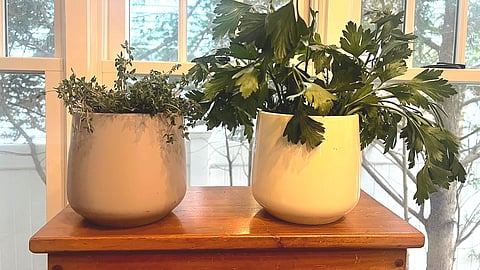
That resilience changes once herbs are brought indoors. When winter weather makes outdoor beds unwelcoming, many home cooks turn to kitchen windowsills to keep fresh herbs within reach. Indoors, however, herbs demand more attention and selectivity.
Not all herbs adapt well to life in a pot. Dill and fennel develop extensive root systems that make them impractical for indoor containers. Basil often grows leggy indoors due to insufficient light, while lavender and chamomile spread too freely to remain manageable inside.
Some varieties cope better with the transition. Rosemary, sage, oregano, thyme and bay laurel can survive indoors if their needs are met. Parsley may also grow successfully, though it requires a deep container, regular feeding and supplemental lighting. Cilantro is unpredictable, but worth attempting for those willing to experiment.

One of the most common challenges with indoor herbs is root rot. Containers must have proper drainage holes, and plants should be grown in a well-draining potting mix rather than garden soil. Excess moisture trapped around the roots can quickly lead to decline.
Light is equally critical. Herbs should be placed near the brightest natural light available, ideally a south-facing window. West-facing windows offer a secondary option. Even then, natural light indoors often falls short. Artificial lighting can help bridge the gap. Fluorescent lights positioned 5–10 inches above plants, or LED lights placed slightly higher, should be left on for 14–16 hours daily. When using grow lights, a balanced liquid fertiliser diluted to half-strength can be applied every two weeks.
Watering requires a cautious approach. Indoor herbs fare better with slight dryness than with constant moisture. Before watering, check the soil by inserting a finger a few centimetres below the surface. Water only when the soil near the roots feels dry.
A practical method is to place the pot in the sink and allow a slow stream of cool water to soak the soil until it drains from the bottom. After a few minutes, the soil should feel moist but never soggy before returning the plant to its sunny position.
Despite slower growth and smaller yields, indoor herbs offer a small winter luxury. Being able to snip fresh, fragrant leaves while cooking brings a reminder of summer — and reduces trips to the market in the process.
For more updates, join/follow our WhatsApp, Telegram and YouTube channels