
- LIFESTYLE
- FASHION
- FOOD
- ENTERTAINMENT
- EVENTS
- CULTURE
- VIDEOS
- WEB STORIES
- SPORTS
- GADGETS
- CAR & BIKE
- TRAVEL
- SOCIETY
- GALLERIES
- NORTH EAST
- INDULGE CONNECT

Wall Pilates has rapidly taken over social media feeds as an accessible, low-impact fitness trend that promises a full-body workout without the need for expensive gym machinery or specialised equipment.
Unlike traditional mat Pilates, this modern variation incorporates a vertical surface to act as an anchor, offering both extra support and additional resistance as you move through various exercises. You can easily modify movements to suit your current fitness level by pressing your arms, legs, or back against a flat partition, making it equally appealing to absolute beginners and seasoned wellness enthusiasts alike.
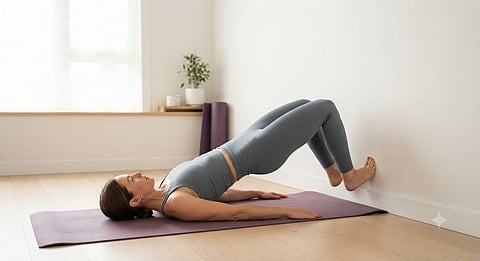
One of the primary appeals of this routine is its ability to build deep core strength while being gentle on the joints. Since the movements are executed with the backing of a sturdy surface, one can maintain proper alignment much more easily than during standard floor workouts. This added stability helps protect the spine, corrects poor posture caused by slouching, and minimizes the risk of accidental strain. Whether you are performing modified wall push-ups, elevated glute bridges with your feet planted firmly against the drywall, or classic wall sits to fire up your quadriceps, every movement is designed to challenge your muscles while keeping your form strictly in check.
Beyond merely toning the body, incorporating a few minutes of wall-supported exercises into your weekly routine can noticeably improve your balance, flexibility, and overall mind-body coordination. It encourages deliberate breathing and controlled pacing, ensuring that your muscles are genuinely engaged rather than simply rushing through repetitions.
Best of all, because all you need is a patch of empty floor space and a blank wall, it serves as an exceptionally convenient home workout option for anyone looking to stay active, strengthen their centre, and boost their everyday physical wellbeing without ever having to step foot inside a crowded fitness studio.
For more updates, join/follow our WhatsApp, Telegram and YouTube channels.