
- LIFESTYLE
- FASHION
- FOOD
- ENTERTAINMENT
- EVENTS
- CULTURE
- VIDEOS
- WEB STORIES
- GALLERIES
- GADGETS
- CAR & BIKE
- SOCIETY
- TRAVEL
- NORTH EAST
- INDULGE CONNECT
For a group of transgender students at the Culinary & Hotel Institute of Pakistan, cooking is more than just a skill—it’s a doorway to dignity, stability, and a different future.
Neha Malik, 31, once earned a living dancing at weddings and parties, occasionally resorting to sex work to make ends meet. Now, she dons a crisp white chef’s coat every morning, determined to build a new career.
“I never miss a class,” Neha said. “I am so absorbed in learning that I don’t have time to dance anymore.”
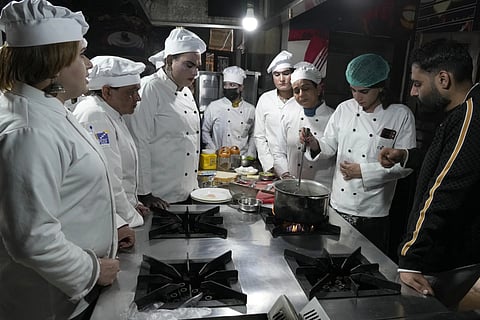
She is one of 50 trans students enrolled in a free six-month culinary programme in Lahore, Pakistan’s cultural capital. The first batch of 25 students began in January, followed by another in February. The goal? To equip trans people with skills that could help them find stable jobs, in a country where discrimination often forces them into marginalised professions.
Pakistan’s trans community has long faced deep-rooted stigma. Often rejected by families and excluded from mainstream employment, many resort to begging, dancing, or sex work to survive. Violence and harassment are widespread, with a United Nations report highlighting that the vast majority of trans Pakistanis have experienced abuse or been denied job opportunities due to their gender identity. Only 7% are employed in formal sectors.
Despite legal progress—such as the Supreme Court allowing trans people to self-identify as a third gender and reinforcing their rights—social acceptance remains a challenge.
Lahore has seen some progress in recent years, including the introduction of a ride-sharing service catering to women and trans people to ensure safer transportation. In 2022, Pakistan also launched a dedicated hotline for trans individuals facing discrimination.
“Society usually looks down on us,” Neha said. “We have to change this mindset. Now, people see me in a chef’s coat and ask what I do.”
The culinary students arrive at the Lahore school daily, swapping their vibrant traditional attire for professional chef uniforms. Their enthusiasm is undeniable, but financial struggles persist. Each student receives a monthly stipend of Rs 8,000, an amount barely enough to survive. Zoya Khan, 26, struggles to make ends meet, with rent alone costing nearly double her stipend. “How can we survive on that when my rent is 15,000 rupees?” Zoya asked. “Most of it goes towards bills.” To make up for the shortfall, she continues to perform at events. “I won’t lie—I used to earn a decent amount from dancing,” she admitted. “But there was no respect in it.” For Khan, this programme represents hope. She dreams of opening her own roadside café after graduation. “Why do we come here? Because we see a future,” she said.
The initiative, led by the institute’s chief executive Nadia Shehzad, aims to integrate trans individuals into Pakistan’s formal job market. “The trans community is a rejected and ignored sector of society,” Nadia said. “This programme will help them gain equal recognition.” Nadia hopes to secure government support in obtaining visas for students who wish to work abroad, particularly in Dubai. Discussions are also underway with local hotels and restaurants to hire graduates at salaries of up to Rs 30,000.
However, trans community leaders remain cautious. Shabnam Chaudry, a long-time advocate, has seen many trans individuals complete vocational training in fields such as makeup artistry and tailoring, only to be denied employment. Without job offers, many are forced back into their former means of survival. “Many of us wonder—will society accept us? Will people eat food prepared by trans chefs?” Shabnam said. Shabnam also pointed to Pakistan’s high unemployment rate, where even highly qualified individuals struggle to find work. “In the face of this tough competition, who will give jobs to trans people?” she asked. “People are not even ready to shake hands with us.”
Despite these challenges, students like Neha and Zoya remain hopeful. Learning to cook has given them something they never had before—choices. “Even if it’s not easy, at least now we have a skill,” Neha said. “And with skills, comes the possibility of change.” Whether the programme leads to sustainable employment or not, it marks an important step towards visibility and recognition for Pakistan’s transgender community. For now, these aspiring chefs are holding onto their dreams, hoping that one day, society will finally welcome them to the table.