
- LIFESTYLE
- FASHION
- FOOD
- ENTERTAINMENT
- EVENTS
- CULTURE
- VIDEOS
- WEB STORIES
- SPORTS
- GADGETS
- CAR & BIKE
- TRAVEL
- SOCIETY
- GALLERIES
- NORTH EAST
- INDULGE CONNECT

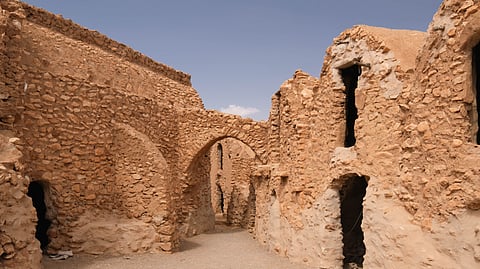
Kuldhara, which lies approximately 17 kilometres away from Jaisalmer to the west in the Thar Desert of Rajasthan, remains an interesting place for many tourists and historians to visit. Established way back in 1291 AD, the village has been deserted for more than two hundred years now. The houses, temples, and roads built of stones are still standing there, but no permanent settlement has been made in that area since the beginning of the 19th century.
Kuldhara village was founded by the Brahmins of the Paliwal community. It was an affluent group of farmers and traders and started inhabiting the area of Thar Desert in the 13th century. The peak period of this community saw them occupying as many as 84 villages in the region of Jaisalmer. The reasons for their prosperity were attributed to their highly sophisticated water conservation techniques through which agriculture could be done in the arid climate of the desert region.
It is believed that in the year 1825, the Paliwal Brahmin families migrated from their ancestral lands in Kuldhara along with 83 other villages around there. They moved away leaving behind houses and possessions that could not be taken along into the desert region.
The most famous legend is the one about Salim Singh, the Diwan of Jaisalmer, whose rule was considered tyrannical. According to the folklore, he asked for the hand of the village headman's daughter, but the villagers, unwilling to comply, decided to flee from their homeland.
A second theory connects the desertion with a problem related to water. According to reports, an earthquake is thought to have disrupted the groundwater level, making agriculture impossible. Historians have also noted that the increasing rates of taxation, shortage of water, and alteration in trade routes slowly depleted the settlement until its eventual evacuation. One more perspective centres on the unity of the Paliwal Brahmins, who collectively migrated rather than endure their new situation.
As per local legends, the departing villagers had put a curse on Kuldhara, saying that nobody will ever live in the village again. While it is not certain why no one was able to stay in the village later on, it is said that all attempts at resettling ended in failure. The village has been declared a heritage site by the Archaeological Survey of India since 2010.
For more updates, join/follow our WhatsApp, Telegram and YouTube channels.